08.12.2025
#56
Ali Parsa
Quadrivia
Building the one clinical AI assistant
Listen on your favorite platform:


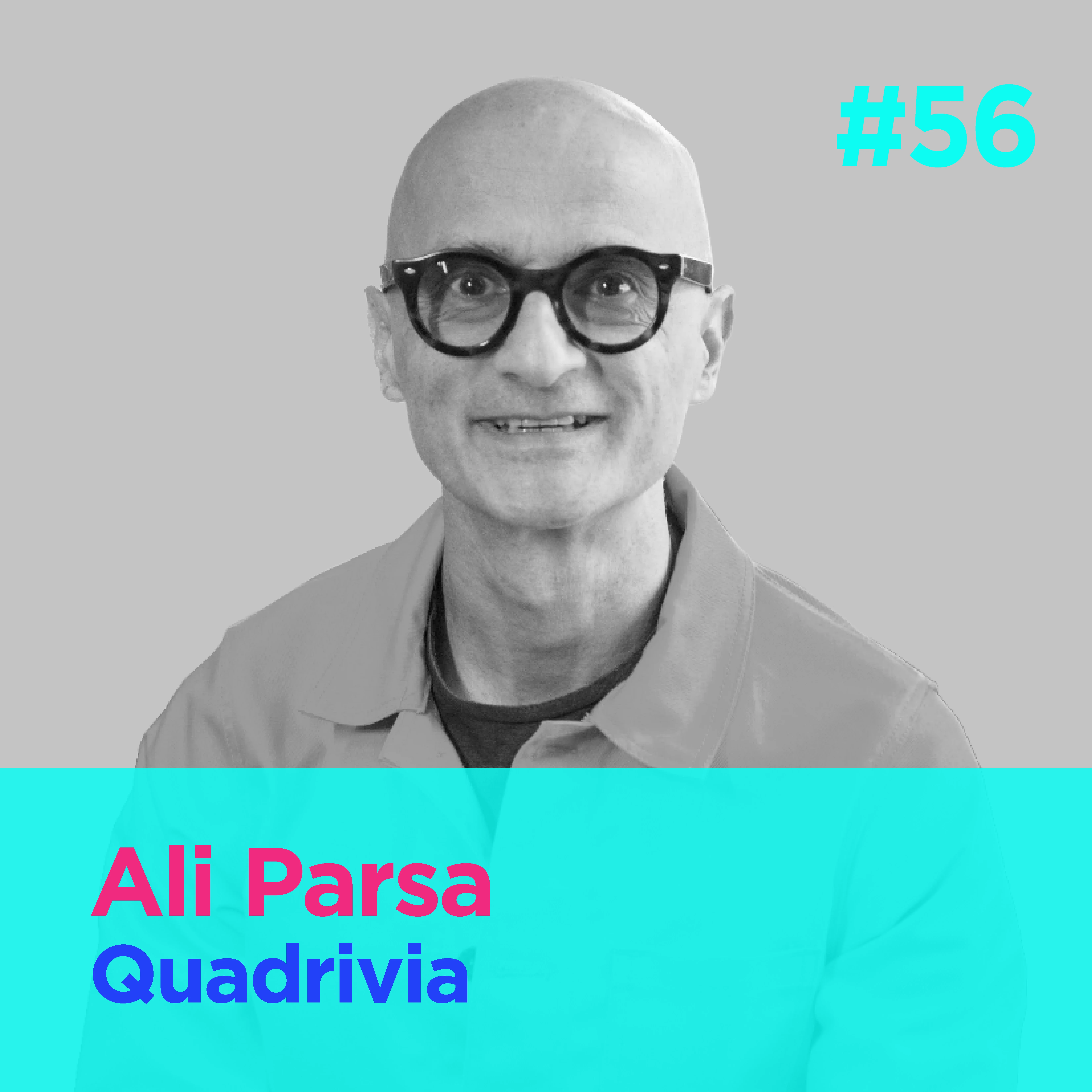
Ali is the Founder of Quadrivia, a company harnessing advanced artificial intelligence to develop autonomous clinical agents, democratizing access to medical expertise, and redefining the future of proactive, personalized healthcare.
Episode notes
What will our interactions with our healthcare system look like in the age of AI?
Whether you are a patient, a doctor, or any other stakeholder in that system, the question is worth asking.
In a world where healthcare costs continue to skyrocket, it is clear we need a radical solution to reverse the trend.
The broader challenge is to restore the balance between demand and supply of care, limited by our capacity to train new doctors.
Among those relentlessly working on this task are Ali Parsa and his team at Quadrivia.
A true veteran of healthcare entrepreneurship, Ali founded Circle Health Group, now the largest chain of private hospitals in the UK, and Babylon Health, the fallen European digital health technology unicorn that once pioneered the use of AI for remote medicine, symptom checking, and patient triage.
Despite all the highs and lows and whatever may have been said about his journey, Ali remains driven by the same mission: making healthcare more accessible and affordable at scale.
Today, his efforts are focused on building Qu, which he aims to establish as the gold standard for clinical AI assistants, serving patients, doctors, and the broader ecosystem of actors in the space.
In this episode of Impulse, Ali reveals the inner workings of this formidable tool, showcasing its ability to automate repetitive tasks that healthcare professionals face daily, and the opportunity it offers patients by being available around the clock to advise, educate, and ensure continuous medical supervision.
We also discuss the key role of healthcare professionals in the validation of Qu, how to approach the risks and European regulations to make it widely available, and finally, the time and caution required to confidently integrate AI into patients' lives and routine clinical practice.
A fascinating conversation that outlines the future of our interactions with the healthcare world!
Timeline:
- 00:00:00 - Ali’s journey as an entrepreneur building healthcare institutions and digital health solutions
- 00:11:52 - Why healthcare is not affordable nor accessible in the current system
- 00:16:17 - The interactions where AI will play a crucial role in healthcare (including a demo of Qu!)
- 00:25:06 - An approach to validate clinically the behaviour of AI in healthcare
- 00:29:54 - Ali’s observations on the current struggles around AI regulation in healthcare
- 00:37:22 - Making AI customisable to accommodate different clinical care practices for similar use cases
- 00:40:01 - Judging a clinical AI’s performance relative to the real performance of healthcare professionals
- 00:45:10 - Ali’s ambition and Quadrivia’s plans for the next few years
What we also talked about with Ali:
We cited with Ali some of the past episodes of the series:
As mentioned by Ali during the episode, you can have a read at Thinking Machines Lab’s publication “Defeating Nondeterminism in LLM Inference” from September 2025, to dive deep into the nondeterminism problem around the use of LLMs.
You can get in touch with Ali via LinkedIn, and follow Quadrivia’s activities on their website and on LinkedIn.
If you want to give me feedback on the episode or suggest potential guests, contact me over LinkedIn or via email!
And if you liked the episode, please share it, subscribe to the podcast, and leave a 5-star review on streaming platforms!
You can also support my work by doing a PayPal donation @ImpulsePodcast!
Lastly, don’t forget to follow our activities on LinkedIn and our website!

Full conversation
Episode transcript
Generated from the YouTube captions and lightly cleaned for readability. Names and technical terms may contain transcription errors.
Read the full transcript
AI. I think we're starting to have the potential to create unlimited abundance of clinical skills. We're a long way from there, but I think we have this potential and that is super exciting because for the first time we have a tool that was never available to us through history of humanity that can
get rid of this imbalance of supply and demand. And if we can get AI to provide an abundance of supply of clinical skills, then everybody has all the clinical skills they need. readily available. Right.
[music] — Good. So, hello Ali and welcome to Impulse. I'm, you know, glad you accepted my invitation to the show. I know you've been on, you know, many other podcasts in the past. I think you're accustomed to the exercise and you know I did listen to some of these conversations ahead of the of today um in preparation to to make sure that we bring a different perspective to to what has already been covered elsewhere. Um so I will ask you to introduce yourself you know uh in your own words in a minute. Um before doing so I'll share you know that you're one of the most you know known health tech entrepreneurs in
the in the industry. certainly you know an inspiration for me and for many people in the space uh as I don't think there is you know many figures like you who let's say have the of experienced the same range of I would say you know highs and and lows having you know that you've gone through in your career um you've created you know from scratch businesses that you know reach an incredible scale internationally so beyond England where you're established be it in you know the physical care delivery space with uh circle health or in the virtual care delivery space with Babylon Health um you know a company that remains to me um you know pioneer
in digital health and you know to some degree also um company that was ahead of its time um there's a lot that's been you know said about your work and your journey uh with these two firms and you know you've already shared um much of your experience and and story in several outlets as I mentioned earlier so the idea um for today is really to focus on your latest venture um Quadriia um so it's one you've announced I think early last year and we're recording this in September 2025 and to me it kind of like embodies you know a sort of panacea for AI in healthcare so um you know the
listeners will will will discover it soon but it's a kind of to me ultimate companion for patients and HCPs um you know at every step of the care journey um I'd like to understand you know your vision for this venture um how you foresee quadriet you know reshaping our relationship as patients and healthcare professionals to our respective health systems uh and how we care for people you know at scale and I'm also very interested you know to learn about you know in let's say in simple terms how it's being built how it's being you know certified and um and the business model you you intend to pursue with it. So I
have many questions for you and you know we'll try to cover as much as we can uh with the time that we have and to get started and as we do and you know at the beginning of every episode of the show I would simply ask you Ali to to present yourself. Wow, you are not only charming and kind
and how can somebody say no to you, you're also well researched and have done such a great job and it's so nice to see somebody doing their job so incredibly well. So congratulation. I mean seriously uh fantastic. Um look, I'm I'm Ali Para.
You've been incredibly kind in the way you introduced me. the reality is um these things always sound a lot better than than the than the than the truth. Um and I had my fair share of things I
tried to do that worked and things that I tried to do that didn't work. That is life. Uh that's what you have to do uh in life. uh we are unfortunately all live in a society and with the advent of social media and the pressure of VC uh models everybody needs to pretend that they are phenomenal and they're amazing and they're incredible and the truth is nobody's anything uh we all we all try our best but but but uh I built circle we got uh
we had our challenges circle helped uh but we had a vision And our vision was can we do hospitals better? Can we create places that people like to go to? Can we uh give the kind of care that we want to give to our family members? We had a very simple rule to all our nurses, all our doctors said, let's just throw rule books away. Just treat people the way you want your mother to be treated. Uh your child to be treated. uh and the hospitals is incredibly well uh in many way and as they did well we were given more hospitals and now today is the largest hospital group in the UK. I
have no association with it. We sold it uh and hopefully the people who own it now are doing as good a job with it. And then we uh but but as an entrepreneur
I figured out that hospitals are if you want are not very scalable. you they're very important but it takes many years to build one and they serve a small community around them and people go to hospital for an acute or an emergency or a special case but vast majority of your time you have nothing to do with your hospital and we thought well with the and that was a time that mobile phones had come in and uh and the
apps have come in and around 2012 2011 it was very clear that we could use these new devices that had all these capabilities to do something very different with that was the time that Uber was coming in and say that I know where you are I know where a driver is I can connect you together we were saying that look I think I can deliver most of the health care most people need and devices they already have like these devices create voice create videos most doctors ask is and that's how we created Babylon. Uh at the time most people thought that is rubbish. It's never going to work. Number of people were
telling me how well as a doctor I need to touch feel. Then I was asking them how many times do you really touch and feel right and we're not saying we can do everything. We're saying we can do enough things. And uh it had its
challenges but it grew really fast. I mean that company grew 400% a year every single year and anybody who grows like that it means there is a demand it's meeting and the demand we were meeting was a demand for accessibility of healthcare but access and our mission was to make healthcare accessible affordable for everyone on earth quality healthcare uh and we figured out that as long as you deliver health care most of the healthare most people need on devices they already have that's highly accessible. But that doesn't make it any more affordable. To make healthcare affordable, you need to understand where the true fundamental causes of costs are. About four 50 60
70% of all our costs are are in people. As long as our clinicians do everything, it will still cost a lot to deliver because you have a very limited number. And the other cost are in about 60% of all our expenditure are on very predictable very preventable diseases chronic care management. Think about it right and and again those can be
foreseen and prevented or well if they are well managed and we thought Babylon should do all of that and and that model worked really well. Uh now we fail for a very different reason. We fell because we chose to take the company public to an Android untested model as a spaxs and
like every spa company that fell Babylon fell. Now I read all this stuff people say yeah it fell because of this that the other honestly not — right it fell because it went public it had $350 million that was supposed to be paid to it. No fault of our spack guys. They didn't have the money themselves. So they couldn't pay it. Now we're public. The whole market is falling apart, going down. The share price is going down. So nobody wants to cover that hole. Quite rightly too. You wouldn't do it. And then we had a debt holders who thought they can take advantage of the situation, own the company. Frankly, you might have done
the same because it's the rational financial thing to do. uh for them they thought they can own something very amazing for a small amount of n money. Sadly they couldn't pull it off and the thing collapsed but that's the lessons you learn but the objective didn't go away. So
that whole thing of still it is possible in our view to make healthcare accessible and affordable for everyone by making it available on the devices they already have that will make it highly accessible and also by
reducing the major drivers of cost as I described it to you and I think AI has a very big role to play. We tried it in Babylon at the time but you know 2014 2015 2016 none of the technologies people are using — yeah existed we needed to bring it together to create things our AI team were fantastic but they didn't have these tools new tools have come in and we think that we should have another go at this I should actually rename it Babylon 2 and and you know I'm incredibly proud of what we did my colleagues did in Babylon and and the objective and the the things and maybe that's an idea maybe I should
rename quadriia to Babalon again — and so you're this is really what's driving your your vision for for quadrivia it's really to you know make healthcare accessible to everyone you know at a at a reasonable price um how has your let's say having seen how these you know current tools that we use now every day you know chacht each I mean I all the models and all these conversational tools that we use and that are very helpful. Um how do you see or what is your vision for how these sort of like new tech stack can enable your your initial vision that you have for with with Babylon. So if you
actually economically think about this uh the reason healthcare is inaccessible and unaffordable I told you what its effects are right but the root cause was not that the root cause is that in healthcare you have an imbalance between very elastic demand I get you
do anything to fix that problem to a ve versus a very constrained supply. It doesn't matter how much I need to see a clinician, that clinician doesn't have time to see it. So therefore, I can't see. — Honestly, rule number one of economics, supply and demand, right? You have too much demand, too little supply, it becomes inaccessible and unaffordable. It doesn't matter what it is. I often say toilet papers one of the biggest commodity things in the world cheapest things in the world became very expensive and very inaccessible during COVID when everybody jump and try to — I never understood that — it's a very simple equation right I and
there is no solutions for that we we don't have universities that produce more they should but they don't have the infrastructure it's very hard to get into And we don't have enough money in our education systems to triple quadruple uh our number of nurses and doctors. So we can't do anything about this. But we they are and by the way the demand is only going to go up. We get older, we get fussier and we learn more. You know what I mean? We demand more. So very different. But but with AI, I think we
are starting to have the potential to create unlimited abundance of clinical skills. We're a long way from there, but I think we have this potential and that is super exciting because for the first time we have a tool that was never available to us through history of humanity that can
get rid of this imbalance of supply and demand. And uh if we can get AI to provide an abundance of supply of clinical skills, then everybody has all the clinical skills they need readily available. Right? I need to say
that we are a long way from that. I'm not in a camp that believes this can be done tomorrow in a year to this idea
that just because AI can digest information and can regurgitate it wisdom. Maybe one day people figure out how to give it wisdom. Wisdom comes with experience, with age, with ability to do. And I think therefore the doctors are and the nurses are super important to do that. And by the way, AI doesn't give you care, right? Often you know what the problem is, what the solution is. You're going through it and you just need somebody to put their hands on your shoulder and take you through it. I mean many people, I'm not rich enough to do it, but many people have personal trainers. They can find on YouTube what to do in a gym, right? But is that
personal trainer's role is not to tell them how to weight lift a weight uh properly is their job is to motivate them is to give them the human touch to go through the process. So I think there is a massive amount AI is not going to replace this but there is a section today of very specific very routine
repeatable tasks and processes that clinicians have to do and those routine repeatable tasks and processes can really be done by AI. I have no doubt.
Mhm. And how does this materialize in your you know having that vision for replacing that administrative burden and creating also that engagement towards uh I mean from patients towards their caregivers and their care system in which they in which they evolve. Um how
do you go about designing a solution that you know can address that that need? — So look I mean the solution is I give you an example right? I mean, let me even I mean, I can even play you some of the AI if you want. Uh, would that be of interest to you? Because um
um I I wasn't expecting to do that. So, I don't have it ready in front of me. Let me see if I can find something and pull it out for you. Um so uh if you take a very simple conversation imagine you go to surgery and imagine uh so that's a very big task right you go do a knee surgery actually I can play you a knee surgery follow-up tip right you go to a knee surgery that knee surgery requires first the doctor or the nurse sees you beforehand and they call you hey are you ready to come in have you got any questions. Normally before you go to surgery, two phone calls
happens, right? Well, those two phone calls, they probably try five to seven times before they reach you, right? So that is about 10 15 minutes time from the nurse to reach you to talk to you. Then maybe your knee surgery is only one and a half hours, right? But then after the surgery, they usually call you three to five times to check on you. Especially in United States, if they don't do that and you have complications and you go back to surgeon, then of course it's their cost, right? So they call you just to check on you. Again, they probably have to call three, four times to reach you. It takes 10 minutes,
5 minutes for the conversation. So a nurse that would have done the surgery and would have spent two, three hours on the surgery, probably have to spend another hour or two just on the pre and the followup. Those are very repetitive routines, right? Those are things that actually they just need to ask you a bunch of questions to make sure you're doing well. And we trained our AI to do that work super well, right? I mean, so I can play you a this
is a one of our people, but they were going through actually an actual case of a surgery and the followup that was happening to it, right? But if you listen to it, it feels really human, right? I mean, I don't know if I can Hi, is this Alex Smith? — Yes, it is. — Can you hear now? — Alex Smith, Dr. Rice, I'm Ku, a clinical AI assistant, and I wanted to follow up after your hospital discharge. Is now a good time? — Now's a great time. — Great. How are you feeling after your knee surgery? — Um, I'm doing okay. My knee feels pretty stiff still. Um, and I've noticed a bit
of swelling. — Some stiffness and mild swelling are normal during recovery. On a scale of 0 to 10, where zero is no pain and 10 is the worst pain imaginable, how would you rate your pain? — Pain is around a four. Swelling seems to be getting a bit worse, especially around turning and stomach. — Have you noticed any redness, warmth or tenderness in your calf area? — Actually, yeah, a little bit. Uh, my calf feels a bit tight and sore when I press on. — Thank you for sharing that, Alex. Are you experiencing any shortness of breath or difficulty breathing? — No, my breathing feels normal. — That's good to hear. Have you noticed
any changes in the color of your leg, such as it looking more pale or bluish? — No, it just looks normal. Um maybe just a little bit swollen. — Have you been able to move your foot and toes normally? — Yeah, I can move that foot. Have you noticed any drainage, increased redness? — Anyways, you got the ver and she will eventually actually there was a very clear case of uh uh something happening. She identifies it. She connects you to a pay to a doctor uh to one of the nurses, real nurses to call you back. In most cases, there is no problem. No one calls you. Right? So, this is very doable. As
a patient, you love it. Now the reality is vast majority of health systems don't have time to do this or money to do this. You live in Switzerland in Switzerland probably the system is not as such for people to call you back. Uh in United States they do because there is a penalty associated with going back to hospital right uh 50 to 60% of all going back to hospitals are highly preventable if somebody reaches out and finds something quickly. So, so it's a great example of something we can do uh today. It's not very complex. It's not very complicated. But, but it is also not very easy. And the reason we are not
with this in the market yet and delivering it at scale and the reason vast majority of clinical voice AI companies out there are not doing this kind of work a lot yet is because uh two
three folds. One is uh that uh health systems take time to build trust. There is a reason why the flat part of an S-curve is flat. You have to wait a long time to win trust. There are companies unfortunately pressed by their investors at the time of the AI and we can talk about this. All this nonsense we hear unless you're growing a,000% a year. You're rubbish. You're not growing. This poor entrepreneurs, younger ones hear that kind of stuff, there is pressure on them to grow. But in healthcare, you got to be careful, right? I mean, you're in real world. them this AI is talking to a real human being about a real issue,
right? And they need to get it right. And we know generative AI is not deterministic, right? It's it is indeterminate. That's its beauty, but it's also its problem in a area like healthcare where you need to have sometimes a deterministic answer. I have to ask all the questions. I need to have the same answer for every one of them. installments of the book. — So I think we're at a place now that we can do a super good job. We're doing it with limited number of patients in the real world. We're learning. We're doing it more. Some companies uh are more aggressive with less data, less thing. They're going to the real world uh
faster than we are. We think the way I think about it, every company I ever built took 10 years. uh and I think in 10 year period frameworks and I just think that I rather be there in four years time uh what what decision would I make today about the speed at which I deploy that that will make me a bigger company better company more trusted company in four years time than it does to — I appreciate also that vision because I think there is this a bit of like we hear a lot about these AI race and everything is like evolving you know very fast and I mean it's true we see
you know models evolving and announcements and so on um but I think you know putting it back in the context of the healthcare industry and you know how you you are very experienced in understanding also like how hospitals you know function you've built many many different ones um so I appreciate also having that you know long-term vision and bringing back this sort of you know grounding in the in whatever we we we hear these case. Um, one of the things, you know, when I looked at what Quadrriond on on your website could do, and I think it's also related to this the time that it needs to be, you know, developed, validated, and
certified and so on, is that it seems like it's addressing many different use cases. So, for example, in the use case that you demonstrated when we heard um the system speaking, um, this is for, you know, post surgery management for one indication. And so you could imagine how about you know a cardiac surgery or um you know oncology intervention or brain surgery you know like there's many different in for the same use case there can be you know an infinite number of of indications to cover and and then if you extend that to additional use cases to do you know prevention coaching as you mentioned earlier or to um you
know you know understand a bit what the symptoms of a patient is before there's a first you know medical encounter that expands the you know the the range of things the AI needs to be you know capable of doing and you know validated
for managing these tasks. What's your take on this? It's a really good question and um especially at the beginning there was a lot of talk saying that look go do one single use case really well and then do more and you need to understand the incentive behind that. The incentive behind why you say that is as you quite rightly say and it's common get something really right and then move on to the other thing. The problem with and that was okay if you were building a workflow because a workflow you have to build one at a time, right? Maybe you create a workflow framework and then you basically populate it one at a time. But
the whole point of generative AI is it can talk to you about anything. I mean actually frankly we limit quadriia Q from talking to you about anything. can talk to you about your taxes, right? It sits on Gemini and open AI and gads easily talk to you about anything, right? — So, so it makes no sense, right? To say
because the technology is fundamentally different. — Then it comes down to a very important question which is our thing which is how do you validate? How do you know it's done the right job? So we had to in order to do that we had to build a framework of we call them judge judges like agents who are judges who basically listen to a conversation in detail and say has it done all its job right and then once it passes through all of that then we have real human beings listening to it many times until it the real doctors and nurses say actually this is great we actually have a whole subsidiary
business of nurses who sit somewhere in a country and just listen to these things and don't. So, so with that you
would say okay more limited use cases but frankly even the difference between asking questions on knee surgery versus elbow surgery right is a different parts but it's the fundamental task is the same ask the following five six questions and make sure those following six questions if is this the answer is there right and
these LLMs do a really good job at that. We learned how to moderate them, how to validate them, how to check them. So therefore, we can do a wider direct. Why is it important to do a wider range? Because all the people who tell you only do a small range is because they're not I mean you have to put yourself in the real world where you are out there and then you're selling to your customer. A customer will say that's fantastic. Like you go through all the hassle of getting through a health system 18 months, 9 months, 12 months process. You do that. The moment you do that, the next they
come in and say, "Okay, that was fantastic, but I also have all the guys with the knee surgery and all the guys with the hip surgery and all the guys. Did you do that?" And I said, "Oh, I'm sorry. I got to go and build." Then you don't have a business. You know what I mean? Because each of these use cases are very small narrow usage and a
revenue. You really have a business when it has everything. So we took a long time and you're very observant to have seen this to build something that is comprehensive and customizable across a very wide range of things to do. By the way, all of these things have one thing in common together. They're routine simple healthcare clinical stuff. So we don't do administrative, we don't do complex, we don't do non-rine. So we are still super limited to about 20% of what a clinician does. The other 80% we don't even touch. — Yeah. Interesting. And you know the so you talked about certification and you know my understanding of how medical devices
are you know approved they're regulated is they are regula they are certified against an an intended use and so I'm thinking if you have a system now that's you know covers this you know that range of use cases across you know multiple conditions how do we go or I guess it represents a huge challenge to to validate such a system because you want it to be as you mentioned once deployed applicable to many different possibilities or different scenarios but to do that you need to have the certification and the authorization to do it and so I wanted I was really keen to ask you how do you think because I don't even know if like
regulators actually know they can — I can tell you they don't I've talked to a lot of regulators across different parts of the world I actually last weekend uh was uh spent the whole weekend with Bakul Pat who used to be the head of FDA for digital health and had many conversations around what he's gathering today from his old colleagues and uh and we were actually together when the white house announced that they're going to suspend and sandbox all regulation for digital health AI for two years and uh and actually in Beak had
written a paper asking for this to happen. And the reason for that is because we abs every rule all the frameworks that were built for regulating digit uh the digital devices or medical devices do not apply to healthcare to to AI. They just don't. But in Europe, in some parts of the world, particularly in Europe, but also a little bit in United States, we have built an industry of regulators and our consultants and advisors, all of whom get fed out of this business, right? So they all are
talking really fast and hard about we need to regulate, we have these mechanisms, so let's just use them. And of course, if something doesn't fit, that means more consultants need jobs. More people need to to get things done, right? I mean, so they're happy, right? They make a lot of money, right? Every company needs to have a a clinical this and a this, that, and a that that. Therefore, they lobby more for this to happen. The result is Europe has fallen completely behind in AI. That's just the reality, right? And the Americans have said, you know what, we're not going to go down that road. we're going to win it. The uh Chinese and the Asians have
said the same. Middle Easterns have said the same. So really Europe is just the odd one out right now. Uh it is not for me to say which system is the right or the wrong one. Right? We need to just follow regulations in both. Right? So in United States we have we can do far far more. Therefore we put a lot of resource. We can do bring more and more of Q's capability. In Europe, we are limited in UK or we're limited to giving information and receiving information, but we can't really analyze that information. And where we get our uh u medical device certificate class one is for that limited use that right
— um it's a very big issue. You put your finger on something super important. I was born in Middle East up to the 15th century. The Middle East was the cradle of science, mathematics, knowledge. I
mean, especially down 11, 12, 13, 10th century. And before the Islamic world, it was the Persian world. Huge progress there. But somehow around 15th century to stop
because when the press the Goenberg press was invented the Europeans embraced it. People like Luther used it to bring this debates of philosophy and religion. Scientists use it to circulate scientific ideas, innovations. But in the Middle East, the Sultans and the Mullas turned back and said, "Sorry, this is blasphemous. If you use it, that means the world of our religious books can be replicated by other people rather than us giving the teaching." The Sultan said this is dangerous because other political views can be circulated. And the people who used to write to the Quran and the book said look this takes our jobs away. Right? as a result just didn't happen in that part of the
world. Knowledge didn't get circulated the same way that it does. And to date, less books by far gets translated from English to Persian or to Arabic than it does to a small nation like SP to Spanish, right? If you think about it. So, uh I I think it's a very big
issue. I'm not a politician. It's not for me to decide. It's for us to follow the regulation where where we are. But all I'm observing is I am seeing where AI is taking off and I'm seeing who is talking about it but doesn't have the courage to actually deal with it. Look, the current regulation doesn't work. Simple. The current regulations were built for if that then that, right? And that's really simple, right? If this happens, then this happens. If this then that with AI it's not like that if that
many many things can come out it's indeterministic it can give you any answer like there is no way if you have a chat with conversation with Chpt or with Gemini today let alone with Q you know exactly what the answer of every question is going to be so we need to decide we ban it in healthcare they don't have the courage to do that they talk about we want AI everywhere or we have to say the regulatory environment says it has to be deterministic and I have to know exactly what the answer is every time is not applying here which one do you do have the courage make the decision get it done so people in Europe
my fellow entrepreneurs in Europe know what they're doing in the same way that my fellow entrepreneurs in United States or in China or in Asia or in Middle East do — yeah it's interesting I I had a re I had a conversation in this season of the podcast with Dr. um Batista he's leading the health AI regulatory agency Geneva and so he has a very interesting I think the concept he was bringing to the conversation that I think he's pushing for in all his interactions with governments with health systems is to use you know postmarket monitoring the same way we use it for drugs for AI based solutions and then you just make the you follow
you know what the outcomes are and then you make the decision on whether a solution stays in the market or not based on and and not based on a list of requirements and a level of control you cannot actually guarantee by the way the solution is made. So yeah I'm I'm also go I mean I support your your view on that matter. Um on another um topic and going back you know to how Q is working. Um one of the questions I had was I think medical practices you know vary quite a lot from one place to another even you know within the same country. And so I wanted to ask you how you go
about you know making Q and the system that you want to deploy um kind of like customizable to different care practices. Is this I think it's something that you are considering for sure based on what I've read. Um but I wanted to take the opportunity. — So you're absolutely right. I think every two doctors will do something very differently and every health system does things differently. Countries do things differently. Uh I I think it starts from
the very principle of what are we training here and what are we creating here. Are we training creating a piece of soft or are we trying to create an a
support to a human being? And I think those two are very different. I don't think you create AI intelligent AI the same way you create a software. I don't want to pretend is a human or is intelligent but it's a replacement for a human interaction. That conversation you just heard or many others I can play you. If I don't tell you hey I'm Q you wouldn't know whether it's a human or not right and it's trying to do the job of a human in that world I think all our
mind framework should change and it should think that way right that I am so what would a human do if I once were going to get an assistant was a human would I give them to do a single job that they can only do or does this human being has
the choice to go and work for another doctor or another part of my hospital who want me to do something different what do they do so if I'm a nurse or I'm a resident and I go for a senior work with a senior doctor or senior nurse uh they say hey Ali uh call all my patients and tell them the result of the lab is okay right uh and if they have any concerns I answer it right now I have the ability to answer any question because I learned medicine so I can answer it. Uh for instance if I was a resident and I also have the ability to
call these people so I can do the job. Another doctor comes in and tells me to do the same thing but they say only give them good news the bad news just let me make a phone call. Okay. As a human I know how to do that. I'll do that. Another doctor comes in and says, "You know what, Ali? Uh, I want you to call all my patients and just take their history. They're all coming to see me tomorrow. 10 minutes of my time is going to be about taking them. You take history, summarize it, give it to me." So, I can just check quick things with me. As a resident, I can do that, right?
So if truly AI Q is going to be a clinical assistant to every doctor, every nurse, it needs to behave like a true clinical assistance would have, right? And that's what we need to build.
— I'm looking forward to to seeing this when it's available. You know, — by the way, it's available. I can give you access. You can play with it. You can see how it works. It makes a phone call to you straight away. It's already making four goals in the real world to the really patients. Uh but uh we're going super super slow in the real world with this because because uh you know
what I mean one mistake is too many. By the way it's a very good debate that one — which goes back to your regulatory debate. As I said I was in India and I was talking to one of the leaders in the hell group and people were saying you know in third tier cities in India according to United Nation only 40% of consultations are accurate and the reason for that is there is such a shortage of doctors and these doctors have such a huge queue of people sometimes in a single shift they see 70 80 patients right so they only have two three minutes right with the patient in average what's wrong with you said it
hurts to take an aspirate right I'm exaggerating but that's — but so we know that right — and we also know that the best doctors on the most complex diagnostic work they they are about 80% accurate right so we also know that and so the range is between 30 40% to 80 let's just say for super super doctors 90% accuracy right what if he built an AI that was 90% % accurate all the time on all its conversations. Should that AI be deployed to everybody?
It's a very interesting question, right? Because if it is, we've basically given an assistant or an AI that is as good in that again I emphasize that narrow task it does not the entirety of what a doctor does in that narrow routine repetitive task is as good as any human doctor and better right. So is that not actually at human level? Is that better than human level? But you go to a clinician and say look I do a million interactions a month 10%
are wrong and the newspaper picks up a 100,000 mistakes are made a month. Not the fact that in the normal world 300,000 mistakes are made 500,000 but this is a hum. Do we go is the headline we improved 400,000 mistakes to 100,000
mistakes AI made a improvement on that or is the thing that 100,000 mistakes were made right so now it's invar inevitable AI
makes mistakes as humans do the question becomes the severity of that mistake so if I'm talking to you and I misspelled your name or mispronounce it that's is still a mistake but it's not a life-threatening mistakes. I think we need to get to a point where we are very sure life-threatening mistakes are not happening. We don't see it happening. So it's reassuring but we should grow it as slowly in the real world to make sure it doesn't and we should do easy simple cases uh to start with. uh and that's that's what we're doing. But you understand the complexity in this, right? I mean there's a very big very big major
uh AI agent clinical agent company. Everybody you know their name I know their name. These guys accuracy level they say oh our accuracy level is 95%. And that's under uh lab conditions. In real life, I hear about 30% of calls lead to a human intervention one way or another. They claim they make 100,000 calls uh a week, right? That's 30,000
calls that need another human being to call you 30,000. Which call center of which hospital can make 30,000 extra phone calls? So actually they're creating a necessary world for people by is this a good thing? Now for the company is a good thing. The numbers are growing d but the customers are suspending the operation are putting it off. They're not do adding it off. So be very very very long-term greedy but do not allow other people's interest to force you to do something too fast before it's ready. — Yeah. — Totally. — Yeah. And um so according to your you know sort of like long-term plan um by when do you think um Q will be deployed in a
real I understand it is already deployed um or being deployed you know in certain scenarios in the real world at a reasonable very controlled pace by when do you do you foresee to be available to a broader um — my hope is that — population uh we're currently making tens of phone calls right in the real world because we can listen to it, we can examine it, we can do it. And these are clinical phone calls, not like scribing. And by the way, there's a massive different people say, "Look at AI, it does a scribing." Scribing is not what we do, right? Scribing. You listen to something anyway does it. I don't
really get it, right? Um, you then uh transcribe the conversation. I mean this conversation between you and I can be transcribed on anything right and then it summarizes it right okay describing companies make it to summarize to the way you want right but at the same time then you as a doctor or a nurse check it and then you okay it you're fix it and they say their accuracy rate is 20 80% right so you check change things uh people say look at lovable it's been amazing right how many apps lovable has built that you have to rebuild, redo, right? And it's also a nice kind of demo, but you can't deploy it in the
real world. So, it does something that with AI, autonomous agentic clinical AI, real time, you're doing something very different. There is nobody else checking. There is no one. It's a simult it's it's a real time conversation. So we need to deploy tens of other AI agents to listen to every conversation at that time safeguard it rail guard it make sure it doesn't do something wrong so on and so forth right and that is a very difficult scientific engineering task that we are solving uh I think the results are really good we're doing tens and they're working well soon we'll do hundreds then we do thousands them to do tens of thousands.
I mean that's the way you go. Uh but we are super confident that uh that this is going to work really well in a in a real way without giving the burden to our customers that look we've made a phone call but we didn't close the problem. When I say uh we make these calls we close the problem right? Nobody else needs to intervene.
Yeah. No, that's my hope as well. I'm keeping an eye on the time. We have like five more minutes and I know you have a heart stab on top of the hour. Um, what resources would you recommend us to, you know, check out to, you know, to learn more about the field in which you work. — I kind of figured out that I am just not bright enough, intelligent enough to keep up with the barrage of things that are happening. I just hire really clever people in my team. But I I honestly there is a new paper coming out all the time like you and I were talking about deterministic indeterministic last week
I was reading a new paper that uh the former CTO of open AI's new company thinking lab just published uh which actually claims that they solve the deterministic AI problem right now let's
see whether that works right there is so much happening so fast in this space keeping up to is the role of the professionals. Uh for us enthusiasts, we our job is to to hire them and let them get on with it but also make the judgment of what is ready for real market and what is not there. — Yeah, makes sense. Can you share with us an anecdote from your work you know at Civia that made you realize the you know the impact that you on? uh we announced that we're doing work with modality which is one of the largest GP practices in the country and with various things really interesting we started with
something super simple with them but the moment they saw the effect that what it can do then one single use case is now about 25 30 use cases they want to do right each GP each doctor ah why doesn't it do that it's fantastic to see as I said in a few months time hopefully we will get many many things done. Wow, we're that company operates in UK. UK regulatory environment incredibly hard. But if that company was in United States, we'll be doing thousands of phone calls with them right now. Right. So, as we're going into the US, our customers there are asking us to do things they desperately need very fast.
— Understood. Um, if you would recommend a fellow healthcare innovator as a potential guest for the show, um, who would that be and — you know for your show — or him? — It's a really good question. You're a technologist and it's a show that is for people who are interested in technology. Uh, I met her and I loved her so much I hired her. I mean she it took me a bit of time to persuade her to join us but she eventually did. I I would
uh talk to uh Rebecca Love. She's a nurse, wonderful in her job, understands AI, but can tell you actually what do nurses see in there? It's so very different perspective than me, right? Or I I just hired uh Dr. Shyam
Vas. He joined us from hypocratic AI where they were basically responsible for most of the existing customers right he joined us because he shares the same passion and he saw in us a real care for
solving the end to end medical tech I will interview somebody like him now you don't want to interview many people from one company but my point is the perspective get not the entrepreneurs or the engineers but the doctors and the nurses for whom the AI is going to solve that problem and what motivates them to do that would have thought I would have thought would be really good people for you to talk
that would be would be amazing Ali thank you so much um I you know had to feel or felt like we had to to rush a bit in the end but I I really think I mean I'm really grateful that we had the conversation I think there's you know beyond let's say the talking about the technology how it's developed uh how to manage the I think that part of the conversation was very interesting how to you know validate it and um have it certified um I think your vision for you know seeing you know things long term um and yeah also taking it step by step making sure that you know acknowledging
as well the the responsibility that that you have in this you know because you are managing health of you know real people and Um I thought that perspective to me was refreshing in you know we take things step by step we acknowledge the regulatory complexity of it the challenges that we have um but we're pushing for it and it's seems to be very aligned with your you know vision of making healthcare accessible and um yeah to the broadest population as possible. So I'm really thankful. I I think we will have to do a second episode maybe in a couple of years when when um you know you guys will be u in a different
place. — Thank you so much and uh my apologies if I took a long time for each question but I am of the view that uh a smaller amount of things talked about in detail is more valuable than a lots of short meaningless answers. So, I hope you forgive me for talking too much, but uh I am grateful to you for giving me the platform to talk to your listeners. Thanks for watching the episode. I hope you enjoyed it. You can subscribe by clicking on the podcast channel at the top right and watch another episode here at the bottom.