05.01.2026
#57
Ihsan Almarzooqi
meta[bolic]
Reimagining care for metabolic disorders
Listen on your favorite platform:


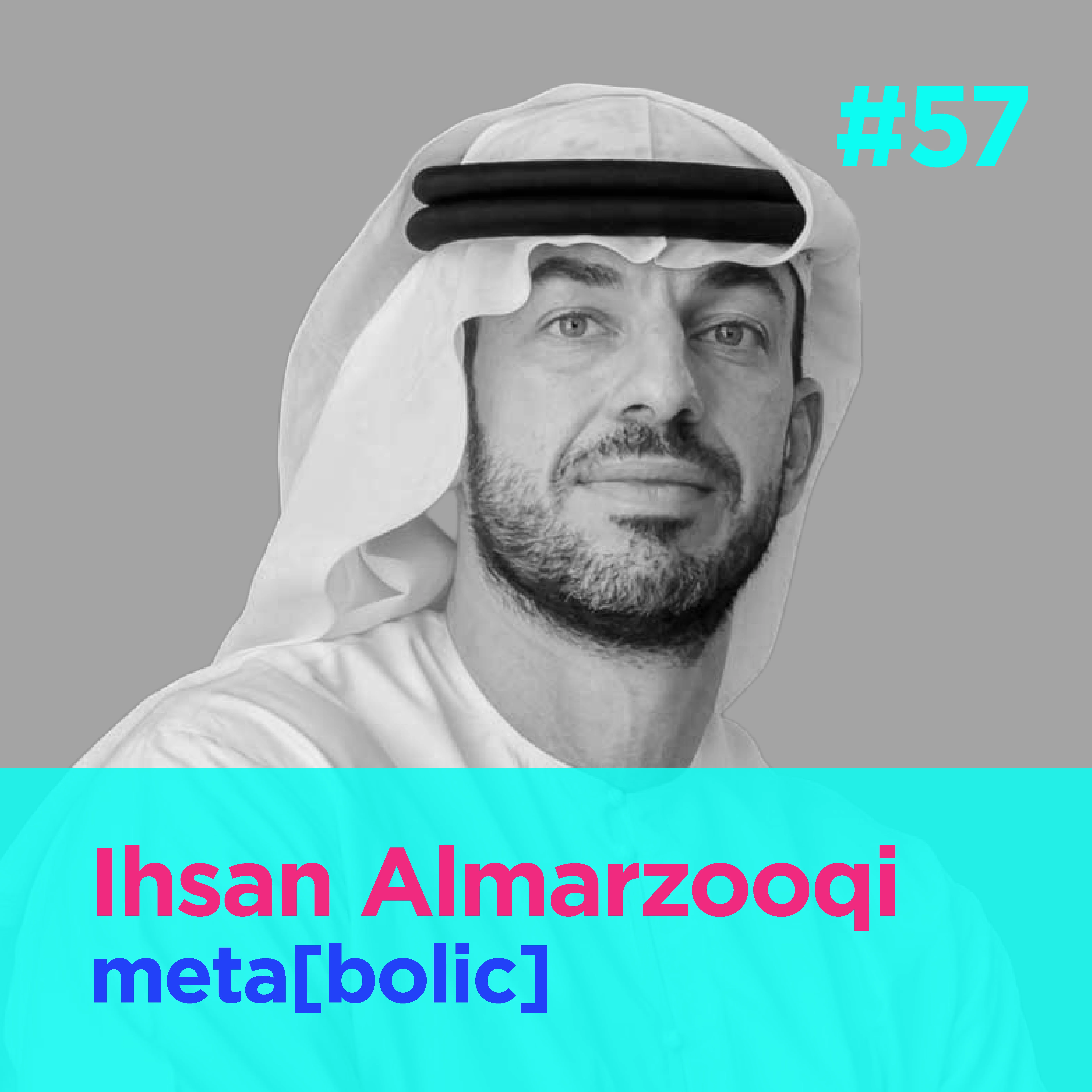
Ihsan is the Co-Founder of meta[bolic], a company pioneering innovative care models for metabolic disorders, blending digital technology and behaviour change to shift the paradigm from reactive treatment to proactive management.
Episode notes
Which care models will handle the scourge of metabolic disorders?
Here are a few figures to understand the extent of the problem:
- Close to 1 in 4 people live with some form of metabolic disorder (according to the NIH).
- It accounts for more than 13 million deaths annually (according to the Global Burden of Disease).
- The economic burden it represents is expected to go beyond $4 Trillion USD by 2035 (according to the World Obesity Federation).
Beyond the societal questions raised by this public health phenomenon, the real concern is whether traditional care models are capable of managing this group of conditions effectively and sustainably.
This largely because traditional care models are episodic and put little focus on behaviour change that is dearly needed to reverse the trend.
Among those who have realized it and are striving for alternatives, Ihsan Almarzooqi and his team at [meta[bolic]](https://glucare.health/) stand out.
Based in Dubai, they have developed and deployed a unique care model, which they aim to replicate in Europe, starting with the UK.
Their approach blends cutting-edge diagnostic technology, remote monitoring, and a care pathway involving frequent interactions with medical staff—enough to drive long-term behavioural change.
And its efficacy has been demonstrated through numerous studies published since its inception.
Beyond this hybrid care model, what is striking about Ihsan and the meta[bolic] philosophy is their relentless focus on improving outcomes for patients and incorporating the latest care innovations to raise the bar.
Up to the point of reducing their operational margin to extend their knowledge of each patient, as long as it improves the level of care.
In this episode of Impulse, we discuss what makes this care pathway unique, its implementation, the results, and how we can leverage traditional reimbursement schemes while still delivering a continuous and outcome-oriented care experience.
An inspiring and thought-provoking conversation on what care models for metabolic disorders can be, despite the constraints posed by most health systems!
Timeline:
- 00:00:00 - What led Ihsan to pioneer new care delivery models
- 00:06:03 - The extent of the metabolic diseases pandemic
- 00:10:39 - Why traditional care models fail to address metabolic diseases
- 00:16:49 - The components that make up the meta[bolic] care model
- 00:23:37 - How the meta[bolic] care model is funded in the UAE
- 00:30:57 - Ihsan’s philosophy about evidence generation and how it is lived at meta[bolic]
- 00:33:28 - Scaling the meta[bolic] model to other geographies beyond the UAE
- 00:38:45 - How to keep patients engaged throughout their care journey
- 00:41:55 - Ihsan’s wishes for the democratization of value-based care
What we also talked about with Ihsan:
As mentioned by Ihsan during the episode, you can have a read at Ground Truths by Dr. Eric Topol and his recent book Super Agers, an encyclopedia of the latest medical knowledge around longevity.
Ihsan also recommends listening to Dr. Peter Attia’s podcast The Drive, which investigates everything from exercise and nutritional biochemistry to cardiovascular health, cancer, cognitive health, mental and emotional well-being, and beyond.
You may also read Ihsan’s publication in NEJM Catalyst Innovations in Care Delivery alongside Hala Zakaria, and Ali Hashemi, on their hybrid care model to manage diabetes in the UAE.
You can get in touch with Ihsan via LinkedIn, and follow meta[bolic]’s activities on their website, LinkedIn, Facebook, Instagram, and YouTube.
If you want to give me feedback on the episode or suggest potential guests, contact me over LinkedIn or via email!
And if you liked the episode, please share it, subscribe to the podcast, and leave a 5-star review on streaming platforms!
You can also support my work by doing a PayPal donation @ImpulsePodcast!
Lastly, don’t forget to follow our activities on LinkedIn and our website!

Full conversation
Episode transcript
Generated from the YouTube captions and lightly cleaned for readability. Names and technical terms may contain transcription errors.
Read the full transcript
So we decided, you know what? Let's just build everything from scratch. Let's build the clinics. Let's build the lab. Let's build the pharmacy. Let's build our products and tech teams. Um, you know, let's build everything. Let's control the physician's behavior. — Um, everything has to be done inhouse so that the entire journey is one and seamless and there's no like parts kind of fixed together. And then let's change that in clinic workflow. So when a patient comes into glucare, we've reversed the the the entire scenario.
So hello and you know welcome to Impulse. Um I feel like I say it all the time, you know, at the beginning of every episode, but I'm you know, really looking forward um to our conversation today. you know, when preparing the this season of the show, I I I told myself, you know, we needed to do one episode that focused on, you know, metabolic diseases around which, you know, there's obviously a great momentum in in biotech and health tech. We're recording this on, you know, the 14th of November and I just saw before that this is World Diabetes Day. So, it's it's a line with um it's quite, you know, a good
coincidence, I would say. Um so there are many reasons you know um why I was excited to you know um talk about this topic with you. Um the first is that you know I mean ultimately you know the impact that these conditions have on society is is huge. Um so I think you know if we take the example of diabetes there are more than 800 million people who live with it. I think there's more than 2 million people annually who die from it. And you know the the prevalence is only increasing. So the situation is quite alarming. Um and you know on the other end we have new treatments um that
are now you know getting a lot of traction like the the GLP ones from the incredin hormones family um that are really you know transformative from a medical from a medical perspective um I think our understanding of these conditions is also you know increasing on on a on a let's say a research level and you know on the tech side um our arsenal is also expanding you know we we have we see the democratization of continuous glucose monitoring use. Um we see also a large array of wearables um that you know enable us to measure like a wide variety of biomarkers and vitals with you know clinical grade precision. So I think
there are like you know many reasons to be excited um and hopeful about um the space and you know my hope for today is really to you know help our listeners realize you know the potential um that we have today to address metabolic conditions which you know also when combined with a holistic care approach and you know new care delivery models like the ones you're spearheading with metabolic and that we will talk about today um can have a really you know incredible incredibly positive impact on society. 80. But yeah, before we unpack, you know, all of this, um, Isan, I will, you know, invite you first to present yourself and, you know, thanks
for being with us today. — My pleasure, Matteo. So, I'm Marzuki. Um, background, um, education wise, started off as an engineer, did chemical engineering, then pivoted towards life science, did a PhD in gene therapy out of UCL, also did an MBA out of London Business School. After that started my career off in a sovereign wealth fund for the government of Tubet. Um building essentially life sciences infrastructure. So labs that other businesses can can go and occupy and and start creating an ecosystem. Um moved over to the sovereign wealth fund of the government of Abu Dhabi. Um and became um deputy CEO of a kind of a large healthcare um division of that sovereign
wealth fund. And everything was green field. We built and everything ground up. New concepts Cleveland Clinic up Imperial College London diabetes centers um labs in you know in collaboration with lab corp. So a lot of partnership model um um from different parts of the world um but all green field all start from scratch conceptualize the project to project manage to eventually sitting on the board. Then a few years ago I decided to um you know go the entrepreneurial route um for a number of reasons. Um I also saw the failure of traditional care settings. So you know once you open so many different types of I don't know healthcare pro providers
and and looking at the outcomes you realize that whilst it's they are nice buildings they are nice new uh entities and they serve better than the legacy but the outcomes were not significantly different. So the idea came that you know we need to have a new care model um around one particular type of disease group metabolic health which we'll we'll talk about um and that's where my entrepreneurial journey started 2028 uh it's now 2025 so um you know we've we've now expanded our care model from one facility to to numerous facilities both in the UAE and outside the UAE. really really cool. You know, I thought as well maybe I mean I talked about
diabetes in the introduction, but maybe you can give us you know a sort of like um um understanding of you know metabolic diseases let's say in general and you know what are their let's say characteristics compared to you know other chronic conditions so that we can you know make maybe anchor our conversation around the you know high level understanding of what these conditions are. — Yeah. I mean most people think when they think metabolic diseases they think diabetes. — Yeah. It's one of those uh and I'll give you some statistics to see how large the total addressable market here is for metabolic health. But it's very similar in all developed countries.
— So um we are an endocrine practice. So the majority of our physicians are endocrinologists and those are the kind of uh physicians who manage diabetes. Not to say diabetes can't be managed by family medicine or GPS. Um but our model is is usually endocrine led and GP supports it. Um so you know metabolic health or metabolic syndrome we know the aspects of it. It's not just um you know a fasting blood glucose issue or an insulin resistant issue. It's also a waste circumference issue. It's a it's a hyper lipidmia or cholesterol issue. It's a hypertension issue. Um it's a weight issue too. So you know all of these characterize what is metabolic
syndrome. And you need several of these five to characterize as a let's say dysfunctional metabolic syndrome. Now in diabetes they usually have you know more than two or three at the same time. But there's also pre-diabetes. — Um there's also obesity — and then there's under other endocrine disorders or hormonal health. Um everything from thyroid care to you know PCOS to HRT. Um all of those are programs we and so you know with that endocrine base you can do quite a lot. Now we started off with diabetes — in this region in the Gulf region you know one in four people have diabetes so it's about 25% of the population very
high — um actually the most countries in the top 10 are in the Gulf and that's a correlation with the GDP the higher your GDP you'll just see more type 2 diabetics — um about 20% of our population is also pre-diabetes and then about 10 to 15% are obese that don't have pre-diabetes or diabetes So when you look at a total addressable market, it's almost 60%. — And no healthcare problem could be as big as this. — Yeah. — Nowhere in the world. Um so and then if you add hormonal health which is to do with lifestyle and also some insulin resistance and you start going to 80%. — So we thought you know the best way to
tackle one single problem if we were to tackle that is metabolic health. We did start in diabetes but the tools we currently have in our new care model which we'll talk about is very similar to pre-diabetes and obesity and — it's almost the it's the same physician it's the endocrinologist it's almost the same lab tests or let's say add-ons to the core lab tests same diagnostics the same GLPS that we we will talk about too
um you know the same care pathways in terms of lifestyle modification so we started off with diabet 80s and we called ourselves glucare initially. Um and as we started capturing more and more of the other segments um you know we we thought about a kind of a name change. It's we're no long because people would say well I'm not coming to glucare I'm not di I'm not diabetic but I really want to optim hormones or I feel like I'm starting that insulin resistance journey or I'm gaining too much weight and I don't understand why. And all of these to us is metabolic syndrome. So there is a there is a shift
towards our branding towards metabolic syndrome — although it's a very difficult name to um to protect because it's scriptive name. — Yeah. — Um you know we decided that we will brand towards metabolic. It will be probably announced in the beginning of the year. Uh glucare will remain it remains a program that is centered around the research that we do. Um so that's the idea. That's the idea. We want to tackle the biggest total addressable market and of that we can probably service a big chunk of it by focusing only on metabolic diseases. — Understood. Yeah. So I mean I I didn't I was not aware you know of these numbers
in the in the Gulf region and going back to what you saw in your previous experience you know building up you know labs and and and care providers. Um I mean there's obviously a like the need to absorb that amount of care that is needed to address that you know these conditions at that scale. Um that's quite striking. Um why I mean going back to to that topic like why or what were the problems you saw you know in let's say traditional care models and approaches that failed you know in approaching you know let's say rightly um the this particular type of chronic conditions. — Yeah. Look, we let's let's look at it
from a couple of uh ways. Let's look at what the traditional care models currently produce in terms of outcomes. We are all using the same medications and we're all using the same education in terms of managing a patient. So our pathways for managing a disease hasn't really changed. So you know if we look at the metric HBA1C which is the average hemoglobin over this is a typical biioarker let's say that um most um
physicians use to describe it's not the only one it's not the best one but it's the one that is currently the most common in the UAE despite it being a very um you know access to care here is not an issue it's not the you can get access to very good care everyone has insurance nationals or expatriates Um and we have all the medications that were usually second or third globally to get these medications after the US or some of the European countries. Um you know the average A1C here for a managed patient with diabetes is about 7.7. So everything above seven is uncontrolled. — You ask you know we have all of this
access but they're all hovering around 7.7 7.8 which is disastrous — because it adds multiple fold in the cost of managing this patient. This patient will get other co-orbidities and then you know the cost starts cascading upwards. So we have to ask like why is it 7.7 7.8 you know, um it doesn't make sense. And this is a patient regularly going to a doctor, taking all the latest medications, getting CGMs, and it hovers around that. And and you know, when I first set up the initial diabetes centers in my last career, you know, I saw that number, too. They're not getting necessarily worse with time because now they're better managed, but
they're not getting better with age. — So, as they grow older, it's only going to go one way. And we've never heard of a story of a diabetic who became older and better. It doesn't happen here. Um and the reason why is twofold. One is we
are practicing medicine today episodically. We see a doctor for 10 minutes. He takes a snapshot of some diagnostics, some scans, creates a plan. That plan, which is problem number two, is primarily based on therapeutics, on prescriptions. There is advice around nutrition. There is advice around lifestyle modification but it you know goes from one year to the other. No one cares, no one tracks, no one does anything. The doctor is not incentivized to do anything beyond just prescribing. — And then you come back in 3 months and do the same exact thing um where you get a snapshot you know whether that the only real decision is should I increase your medications or
should I reduce them. — That's the only decision that happens. But in between these two visits, let's say from zero to 3 months, the physician or the team is completely blind to what the patient is making in terms of a decision in his life or tracking. That's where the problems happen. Not the five or 10 minutes in the clinic yet we don't have any visibility of what happens to this patient outside. So we said okay let's do two things. One thing, change it from episodic to being continuous. And two, let's change it from being only prescription medicine to prescription plus behavioral change, behavioral tracking. Now, that's easier said than done because the current care system or
payer system today pays for what happens in the doesn't help. It doesn't actually pay you for changing behavior or tracking a patient or monitoring their step count or their stress levels outside the clinic. So no one does it. Everyone's focused on the incl clinic aspect. So we decided to create an end-to-end solution. And a lot of people in our initial journey said, well, you know, you guys look like a remote patient monitoring platform. You know, why don't you go to other clinics — and you know, and give that software to them so they can do it. And I can tell you that if I did that, if I took that
advice would have definitely failed. First of all, they're not incentivized to monitor patients providers because they're not getting paid. Second of all, imagine going to a legacy provider today
provider. What does the incl clinic experience look like? And I'll kind of describe theirs and I'll describe ours. — Um, you go in, you see a physician, you describe your symptoms. I'm diabetic. You know, I've been di I have diabetes for 5 years. I take these medications. I cannot do this. I smoke, whatever. — Um, and you know, they take notes and then they request labs. And in this part of the world they ask for insurance approvals. You know once the insurance approvals comes then they go give the lab tests and then you know um you know a few days later they get a call from the doctor you know your lab is this
that you should change your medication go to the pharmacy and pick up your medication. Um and then yo yeah you have a cardiac issue you should probably go see the cardiologist and schedule an abdominal ultrasound at the same time. So the patient goes and goes to different departments managing this care. and come back in three months and we'll look at what happens. — So today this is a system dictated by what insurance decides they allow that cover to do and whether the physician is good enough to justify those tests. This is what it has today. It's completely controlled that way. — The the hospital or the clinic will never do a service which is currently
not covered. They will not take that risk. So imagine that was the status quo of glueare and I added this additional remote patient monitoring or you know continuous behavioral to this broken system. — Yeah. Yeah. — Get no compliance of patients outside because that system is so frustrating to patient this you know this bouncing around from different departments seeking you know what do I do? What do I get insurance approvals insurance denied this test but I have to pay out of pocket for that test. That is a broken system. So adding a digital solution onto a broken system, you'll get up you'll end up getting a broken digital system. That's it. So we decided, you
know what, let's just build everything from scratch. Let's build the clinics. Let's build the lab. Let's build the pharmacy. Let's build our products and tech teams. Um you know, let's build everything. Let's control the physicians behavior. Mhm. — Um everything has to be done inhouse so that the entire journey is one and seamless and there's no like parts kind of fixed together and then let's change that in clinic workflow. So when a patient comes into glucare we've reversed the the the entire scenario. They come in say let's say we know he's he has diabetes. He's told us he has diabetes on the phone before. So he goes in we draw bloods. We turned those
bloods in a huge panel in about 30 minutes. So we have created a real time lab on site — and I'll tell you why we did that when I'm not sure why many other providers should be doing that because it's a huge convenience to their patient to get that those labs immediately and have those discussions with their physician as opposed to a call you know that happens two days later. Then we've added all the modalities we needed in a series approach. Some of which are point of care AI software FDA or CE marked that allow the physi physician to get an immediate report without the need for a radiologist or an opthalmologist to
write a report because that takes time. — So I'll give you some examples and I'll give you the actually the real workflow of a diabetes. They come in the the first thing is blood so that you know the clock the clock starts on the 30 minute turnaround but then they get a retinal scan which gives us retinopathy and CVD risk both AI softwares don't need human don't need opthalmologist or cardiologist then they do a pseudo scan it's again another software that gives you um neuropathy um um level then you do a liver scan then you do a thyroid scan and an abdominal scan — um and an ECG and a body composition now
not all of these are obviously run with an AI software layer — but a lot of them are so in this journey of seven to eight different diagnostics — takes about 30 minutes in total — by then they go to the coffee shop they break their fast whatever if they're fastick — and then they get called into the doctor the entire results are ready at this point in time so the labs are ready all the diagnostics are written up all of them are written up with you know with the retinopathy saying you should you to see an opthalmologist or not so they can make a decision there. you know everything is done
and and you know the question is well did you get insurance approval for that you know how did you run all of this without even asking did they even see a doctor and I say well you know what in the end of the day it's just maths maths calculation I know what my rejection rates are with insurance companies and I can calculate that and there are certain things they'll pay for and there are certain things they won't pay for — but I want the completion of the data set I do a cognitive function test for every diabetes patient patients, you know, doc, the insurance companies never pay for that. The guidelines say it
should be done. I do it because I want the data. — Okay? So, I know that I shouldn't get I won't get paid for that. Whatever. I'll take that chance. Some lab tests are a little bit more difficult to get, but I don't want to have missing — data product. I give the physician everything he can possibly need. So, then they go into the physician room and you know the, you know, the first thing they're surprised how quick all of this was. And then the is ready. This is amazing. I've usually takes three or four visits and insurance fights and all that kind of stuff. They go into the physician room and the physician goes
into a presentation mode with the patient. So this is the first time we tell physicians, you need to present these results to your patients because I need the education process to start now. You will be surprised how many patients who have diabetes or pre-diabetes or PCOS, they don't know what HBA1C is. — Yeah. No one's ever explained it to them properly other than the other 10, you know, parameters or 20 parameters that needs to be explaining. They don't even know the basics. Some even don't know what type of diabetes they have — because doctors have never given the time to explain it — to explain it. — We've created this wonderful dashboard,
this, you know, wonderful setting where the doctor goes into PowerPoint presentation. Well, it's not a PowerPoint now, but it looks like that. And if and the patient is just asking, what does this mean? What does that mean? Oh, it's high. It's low. Look at my scan. and we show them the scan. We want that whole process of — agency to happen. — Yeah. — With I want to know what the scan even though I don't understand anything and what it looks like. I'm I'm involved in this in the description of what I have and that gives me some agency. — So they have this this 40 45 minute conversation and they're shocked because there was no
insurance involved and then we'll say okay here's your plan. We know exactly what your plan is. Then they go to and they've been handed over to another team. The team downloads an app, gives them a wearable ring um device, in our case, Aura, um a CGM, a wireless weight
scale. We teach them how to food log. And then we say, okay, you know what? There will be a minimum number of engagements from now when you leave the clinic to three months later when you show up again. And that's on us. And it's mixed. It's personal trainer, it's life coach, it's dietitian, it's diabetes educator and it could be the same physician again if they need any discussions and they all have a chat without the patient and they also have a chat with the patient — with the patient — in in the system. Now that — kind of is a secret sauce — that you have to have a minimal number
of engagement. This is not rocket science when they leave to when they come back there needs to be a minimal number of engagement. to us. We publish these results. It's about 11 minimum. Okay? Any less than 11, you don't get the effect of behavioral change. Any more than 11, you can go up to 15, 16. Any more, you don't you start getting the law of diminishing returns. You start to do too much, but you're going to get the same results. You're just burning resources. — Yeah. — And that's the model. It's a continuous model. We call it the hybrid model. And patients absolutely love it. and the compliance out of clinic that whole
engagement that happens out of the clinic is high because the incl clinic experience was very good. — Mhm. I I I think I mean you touched on the I wanted to ask you a bit the question later but I think it's worth to ask it now regarding the how is this you know paid for and uh how do you deal with insuranceances and how do you you know fund the whole um the whole system because I think I mean for people who discover this you know through that conversation they might be really surprised that we can actually do this and maybe there are some specificities to the you know UAE health system or the
Gulf region — but can you share a bit about about how you you went about this. — Sure. I mean, look, we knew insurance companies do not know how to pay for behavioral change, wearables, tech, aura rings, they're not going to do that. They there's no codes. They don't exist. We follow a very American system here, fee for service. — Okay? — You provide the service, you get the fee, — um CPT code base. So, unfortunately, all of what I described outside the clinic has no CPTs. — Okay? There are some exceptions to the rule. If you monitor a blood pressure cough or CGM, you can get — Yeah. Yeah. For certain
— majority of self present like if I if I put a personal trainer to change their exercise routine every week, you know, we're not going to we're not going to get paid for that. — So, there's two ways. You can either ask the insurance to pay for it. You you can ask the patient to pay for it. If you ask the insurance to pay for it, they don't even know what you're talking about and they're not smart enough to understand what you're saying. And there is no performance-based contracts here to kind of do a long-term perform based thing here. So it's all fee for service. If you ask the patient p to uh to pay
for it, they simply won't because everything else was covered by insurance. Why do I need to pay for this behavioral part? And people will start picking and choosing and say no thank you. I don't want the aura ring. I'll just do the lab tests and you know insurance covers things here. Labs, diagnostics, doctor visits, meds, that's it. Everything else we pay for it. And you know you might ask well how do you pay for it? You know look if I control the entire and this is where I think a lot of digital health companies suffer. — You know today digital health companies are struggling to get reimbursement because they are force-fitting
themselves into the leg payment model. Where do I get the money? Oh the provider should pay for me. The patient should pay for me. You know you know and it's not going to happen. You need to tap in to the payer. the payer will only pay what those four things. So if I control all four things, I have enough margin to cross-subsidize things that doesn't get covered. So it's an internal call that we decide, — you know, because what we're our number one KPI or our number one mission is outcomes. It helps the outcome. So I'll do it. — Um I've got margins in all other aspects of what I control in that bricks and
mortars clinic that allows me to do this. But if I was a digital health company, you know, either doing it myself or working with a provider, it's coming out of the provider's pocket and they just won't do it and they don't measure outcomes. So they don't care that all of these additional digital tools are h helping their patient. They simply won't. They, you know, they're for profit. So that's how we do it. — That's incredible. And I was thinking, so basically, I mean, the patient, it's really like no no cost at all for the patients who benefit from it. And any patient can show up to your clinic, you know, who have I don't know if they need
to have already um you know, a diagnosis or be in a pre let's say condition phase like pre-diabetes for example. — Any any patient can show up as long as they have coverage which is the law here. — Yeah. — They should have coverage. Now we are in network with most insurance companies. There are some one or two that we decide not to work with and then there are some tiers that are in the lower category that they the provider the insurers themselves don't want those patients to come into centers like ours but that's I wouldn't say that's everyone. So — you know yeah nobody needs to pay now we
will eventually move towards a different system because now we've proven the model works and we do this for diabetics pre-diabetics um and certain other metabolic health. So it's not for everyone who comes one time for a health checkup they are not going to be put on the program because there's nothing to be put on that program. They don't need that behavioral change — aspect of it. So they have to qualify as per their clinical results. uh we are moving towards a membership model because look there are a lot of things we can do today — that have no CPTs but help the outcome of the patient. I and I'll give you some
very small examples um um that are currently not in the American Diabetes Association guidelines. you know, we can um for example, you know, we do um a
risk assessment on kidney disease that is beyond the current urine test of ACR and EGFR. You know, there are new tests that can give us insights 5 years or 3 years before anything shows up in the urine that today doesn't have a CPT. — It's not covered by insurance, but I it would help me as to manage the patient better. bring the bring the testing modality earlier. There's that new biioarker from RO diagnostics, the tow 217 Alzheimer's screening 25 years before symptoms show up. And who gets most Alzheimer's and anybody else is people with diabetes. It's a strong correlation to insulin resistance. I want to run that, you know, um and I will. We're going to do
it in January with with Ro will be the first center globally to do it as standard. It should be there. But if I wait for guidelines to show up, it'll take at least 5 years before it shows up on the guidelines. But you know, this is the reality of what we're working with. Um, we need to keep adding these modalities. There's a wonderful tool. You know, with GLPs, the biggest problem with GLPs is muscle loss. — Muscle loss is is and as these GLPs get stronger and stronger with time and more weight loss happens, you get more muscle loss. Sarcopenia is going to be a massive issue. We found a wonderful
solution that can give you a a sarcopenia measurement um without the need for a muscle biopsy because no one's going to do a muscle biop — you know we're going to integrate that hopefully next month we will launch it — that again doesn't have a CPT it's brand new it's new technology I want to do it because it helps my outcomes and this future so we will eventually shift towards a membership model where you say you know if you have insurance we'll cover all the stuff that insurance does. But then there is a top up membership where there's a growing body of clear evidence that you should be doing a lot
more. V2 test, wonderful tool that diabetics can benefit. The DKD, the TA 217, there's so many, we have so many of these new things. — So that'll cover for everything else that the insurance won't, you know. Um that's a model I think we will it be like a hybrid insurance membership model in markets outside the UAE where we're not going to contract with insurance like in the UK — we will go straight for a membership model which is not common in healthcare I understand — uh but I think will be common if the cadence of patients continuously come as a preventative or participatory type of healthcare approach — that's that's quite striking you know
the I I looked at new at the website at website before and I mean there's a very clear focus on you know outcomes and almost like you know you everything you do you do it like almost in a research approach where I think like you have very detailed um numbers about all the markers you follow across all the population you manage. Um I mean I assume one of the reasons why you do this is you want you know to demonstrate the benefits and you want you know to some degree incentivize maybe payers and health systems to change how that broken model is operating. Is that is that what like let's say long-term goal? I don't
know if you can easily change that right. — Yeah. Look research costs money and today it's uh uh you know we don't make money from research. You know, most private healthcare providers don't do any kind of research. Unfortunately, even public healthcare providers do very little. We publish more papers here than almost all the private sector put together. Um, and there's a reason for that. One is remember when I said a lot of those things we do don't get covered for insurance. One day, I hope I hope we move towards a value based or performance-based contract as opposed to fee for service. So that'll definitely help when you have outcomes to show you
can and we'll be in prime position to do that. The other approach which um many people don't think about is our research is actually our marketing. You know instead of telling people look we're the best in town please come to us like every other traditional provider and if you ever come to Dubai — drive you down Shakeside Highway and you'll see billboards of all the big legacy providers. is you know we're the best and we are affiliated with this clinic out of the US and you know come to our new shiny center here zero outcomes — nobody can tell me whether they actually produce good outcomes or not so we've
taken a completely different approach now not everyone completely understands what we say but this is part of the process of education of patients to say look go and demand your with your physician when you go to one of these hospitals that has advertised heavily on your marketing — ask what was the A1C score for the last 100 patients. What what are you trending today? Dear endocrinologists, I can guarantee you that endocrinologists will just look with, you know, with their eyes and say, "I don't know what you're talking about." The other thing is that they will pro, if you go to the hospital and ask, they probably never measure any of
that. — So, taking that research as part of our marketing um approach and that's what we push out. — Really cool. Um, you know, I was also wondering and you talked about the UK where I think your your next location will be open if it's not open yet. um how scal scalable is this model you know beyond um beyond the country where you currently operate and um because I have the impression as well it's always a bit the problem you know with healthcare it's very you know local like structures and you might have archetypes that you know are similar like you mentioned UAE is quite similar to the US in for I mean
I'm French it's quite similar to like for example Germany um so how do you go about you know selecting where you expand and considering ing whether you know it's it's a scalable model beyond the the local system where you operate. — Yeah, look our decisions are based on a couple of factors. One is there the need for this service. Is the to addressable market large enough? And we know that most let's say nations have these metabolic health issues. So I'm not worried about finding those type of patients — for sure. — Number two, we look at the public system. — You know, is the public system managing it? Is it doing it a good job? Like in
Switzerland, we know that they generally do a good job. — You know, everyone will complain of course, but relative to other countries, you know, you don't have that much of a structural problem in terms of massive waiting lines, shortage of doctors, you don't have that. — Yeah. — So, we have to think of that. And then we look at the private sector. Is the private sector offering something very similar? How does it look like? Does it look like an enhanced tra, you know, public sector where you just skip the queue or is there something more innovation happening in there? And unfortunately in all the markets we look there's a problem in in all three. So
the first market we decided to go and we will have our first clinic in London it open in uh early summer. So you know we why London? You know people say why didn't you just go to Saudi Arabia? It's next door. They have a big problem. They have the same issues. Look London has a few unique aspects or the UK has a few unique aspects. One is you have a metabolic healthy compromised um population like everywhere else. — You have an NHS which is not performing and is frustrating a lot of people and getting minimal care to patients who need it. Very minimal. I mean an a diabetes patient will see a GP and get
most likely metformin with some other meds. See them twice a year max. No behavioral change support, no tracking, no endocrinologist involved. So and it's resource constraint. So, you know, that looks like a right market. Then you look at the private sector in in London. You know, it's very it's whilst it's private, it's very traditional, too. You know, um you go see a doctor, it's usually sole practitioners working as a collective group, renting out, you know, a hardy street clinic. Um that's not, I think, the the the future of healthcare. So, our London approach will be membership based. — It'll be priced per month. You will get unlimited care as long as we can do
those care in the four walls of our building. — We've taken an 8,000 square foot facility in Nightsbridge. We started Nightsbridge because we actually needed to make sure the demographic is able to afford initially — the first clinics. Obviously, we'll try to bring the price point down and expand once we prove out the first model. But you try to derisk the first one as much as possible. — We don't have insurance there. Insurance not a big thing. So, we don't face same issues here. There is private insurance obviously but they don't manage chronic disease you know their private insurance is for acute so they you know we're excluding those guys too will that model
work I think so I think there is a demand for that I think we can prove it out we're also looking at the US actually our our our second international site will be in Los Angeles we're looking now the US is a kind of mix match between memberships and and uh and insurance — you know and the market is massive there and people are gone into this more wellness space there with these new uh brands that we hear a lot but we're still seeing very clinical focus heavy on the side heavy on the diagnostic site so yeah we are expanding beyond the UAE we're now at uh four sites by by mid
next year we'll be at four sites um and our sites are usually so that you can understand kind of how they look like they're usually between 8 and 13,000 square feet those were the original sites where you have everything under one roof the future because that's not also scalable too like we can't keep opening these large scale clients. — It's slow. It's a slow process and you know venture capital don't like that you know but we're self-funded so we can we can stay focused on that. — Um the next format of clinics will be much smaller will be 1,000 square foot onboarding clinics where you do all that diagnostic that I described earlier
— and then you leave and then it'll be scheduled online because you you don't need the lab real time. you don't need the pharmacy to be on site to schedule. They'll be in, you know, high density centers. So, I think that's where we're headed both. — We'll try that first in Dubai and in the UE and then we'll look at the UK market if we can sustain that too. Really cool. Um, one question you that came up when you were explaining the, you know, in quite some detail the patient experience. Um and you said it yourself you know when the first time they look at some of the results and it's the
first time they have a proper presentation and education about their condition which you know empowers them to you know take action um how do you make sure that this is not like overwhelming you know also assuming that um you know so you you mentioned a few wearables I mean you give them an aaring you give them as a GM they have a scale so I mean for maybe young people I guess it's not really an issue but maybe for you know people with like uh more advanced in age. Um, how do you make sure you don't, you know, lose them? It's not like an overwhelming ask to, you know, track all these things and and
staying, let's say, compliant to the to the programs you you you're delivering to them. — Yeah. Numerous ways. One is you obviously need to give time to the doctor to explain it. You can't expect him to do all of this in five — minutes. Y — So, we give them ample time to do that. Number two, you need to train the doctor to be able to explain it right. — Okay. Because if you tell a physician today, hey, do you know how to read sleep data? You know, they have absolutely no idea. No one's ever trained them in medical to do that. So, we have an actually a training academy.
So, any nurse, technician, physician, program manager, salesperson who joins us, goes through several days of training of what exactly does every team member do and then eventually they'll they'll get the hang of it and it becomes part of the clinical, you know, um um record. Your sleep data is now part of your clinical record as it should be. You know, it's not today. I can tell you it's separated in some cloud that Aura has and then you have the medical record. We think that data should go all into — medical record. And look, the presentation format needs to also be simple, you know. Um we're creating these dashboards where you know you see
a single person which is your avatar which we did from the body composition analysis because they have to do that uh spinning thing. uh and then you say okay let's click the kid kidney I mean it's a it's an order sequential order but let's kick the kidney everything that you did in the clinic now related to kidney whether it's a scan or a blood test will first go through that so you know you compartmentalize it you make it simple UI UX and patients absolutely love it like they feel like this is like a you know this is like a game you know they've gone and they've seen it just engages them and they say I've never
been to anything like this and none of this is rocket science I keep telling all the other providers, — do it. But you need your own product team and you need your own engineering team. — Um, and you need to think a little bit differently. Unfortunately, healthcare providers don't have a training academy for wearables. They don't have UIUX people on staff. They don't have a product team. They have to just license whatever is available and just work with that. So, it's all kind of like patchwork stuff. Mhm. — I think the future of healthcare provider, if I'm a clinic or a hospital and I have some scale, I will have an
in-house product and an engineering team because I need to integrate wearables properly. I need to get the right kind of dashboard, not whatever is being supplied to me by the manufacturer. It doesn't work. Um, so that is what I think will happen if you're trying to be innovative. Mhm. No, it's it's fascinating, you know, like I think and I know if I ever go to, you know, Dubai or well, maybe London, you know, to see the the locations, you know, with my own eyes because I think it's quite a I mean, I don't know if I would experience it as a patient, but just to see, you know, how it operates, that would be
super interesting. Um, you just touched on, you know, your vision. I wanted to ask before we go to the recurring questions because I'm mindful of of the time. Um what do you think will be let's say the you know or what are maybe your hopes and and vision for how we will treat you know metabolic conditions maybe mid to long term so like you know in 10 to 15 years or 10 years in awards.
Um, look, I hope and we might be just one of many, — you know, innovative care pathway providers that people change the way we do things. Today, it's a replica of 30 years ago. The only thing that's changed is medication, some additional lab tests, um, and education access has changed. Obviously, all of those have gotten better, but the way we currently manage a chronic disease is exactly the same. It's super episodic. So, I'm hoping people do that. And when people say, "Well, how do you, you know, how do you expect healthcare providers to change?" Well, when you get a new device or a new therapeutic, you you incorporate it into
your, you know, procurement list or into your clinic. — Why don't you keep changing workflows? Like, we change our workflows on average twice a month now, which is a lot. — Yeah. — Okay. And it is, but that's the only way to do it because there's a new thing that comes in. there's a new questionnaire that you have to incorporate. There's a new biomarker that's been recently been added. You have to constantly be on top of this thing. Um, so you have to kind of think like that. You have to almost think like an engineer, not like a physician in terms of optimizing workflows. Um, when people say, well, we don't know how to
do it. We're traditional healthcare. Look, we've published our entire protocol in the New England Journal of Medicine open. They can go and copy it if they want to. I know they won't because it takes a lot of effort. People say, you know, you know, you can't protect this stuff. You should let everybody. Okay, fine. Don't do it. But are you going to will are you willing to sacrifice space to put a gym in your clinic? — It's not going to make money, but it's going to help your outcome. Are you going to sacrifice some margins to build
a research team that looks at your retrospective data? — You know, I think because that's the only way you can improve if you know what your data is. um if you're not measuring anything, what's the point of adding all of this stuff in? And are you going to commit to changing those workflows to improve on last year's results? I mean, if you ask the typical CEO of a healthcare provider, you know, he'll say, you know, this is all cost to me. I'm not going to get paid for this. I don't know. My doctors will resist. You know, there's a lot of things that's going on. It's just too much. I don't
want, you know, I'm making enough money. I'm making a ton of money actually the way it currently is which is if patients get sicker they all make more money there's more visits there's more tests there's more referrals and this mindset needs to go in this fee for service u model it's not sustainable because eventually the provider and the payer which already have a toxic relationship they're going to start clashing what I think will happen in the future obviously there will be a push towards performance-based contracts as standard we see it in Europe we see it in the Netherlands, there's a lot of those happening. It works. It incentivizes the provider to think outside the box to
say, "Okay, how do I get the outcome? Let me try different things." Um, I think the collapse of wellness and healthcare will happen. You know, for example, our next clinics, which the next one will open in a couple weeks. It'll be our first clinic where we actually build gyms with tonals, those machines, those digital weight machines in the gyms in the in the clinics. Now it's not a commercial gym so you don't buy a membership to but it's an induction process where you don't get medication next month unless we see five sessions recorded on those sess on those you know for certain people those who are lo muscle we don't want to give them
the medication so we have to be a bit strict in this but we also have to give them access we can't expect them to go get a gym membership just because we said it so let's just build everything around them you know the you know a future clinic will have a demo kitchen where they'll have to take a course on how to cook food like you got to start looking at this kind of collapse of wellness and healthcare. You know, people talk about longevity and people talk about you see it a lot and you know, it drives me a little bit crazy. — You know, longevity isn't cold plunges and you know, infrared sauna and NAD.
Longevity, if you want to tackle longevity, you can tackle 80% of longevity today by managing metabolic health more properly. Mhm. — You know, whatever the the tools that are needed in the toolkit for managing metabolic health, whether it's medications or exercise or diagnostics or nutrition or whatever, manage that. You've sorted 80% of the longevity question. You know, the other optimizing factors are for a minority of people who don't actually need to come to the clinic. — Yeah. Exactly. — So, so I think that's what's going to happen. — No, I mean it was really eye openening for me. I think it's also like I mean it's the first time that I also hear you
know maybe from a more like phil philosophical approach you know when you said okay well we are including all these biomarker tests we are also you know you keep adding new ones that are relevant you you have a set of services that are not paid for that you know are not paid for and you're willing to you know let's say adjust your um your or you know take it into account actually in your business model so that you have the most holistic you know picture of the patient and everything is done. You know, you mentioned, you know, outcomes many times. I think we hear it also from the way, you know, you speak. I think
that's the that's what you're like pursuing. You know, it's not like you are trying to optimize the system in a way that is, you know, both the most beneficial for patient but also like the most profitable. Um, so yeah, I hope it will, you know, I mean, to me it was really an eye openening conversation and I hope it will, you know, help a lot of people also understand that, you know, this is actually possible. You said it's not rocket science. um you're not you know using some um fantastic new you know technologies that are um you know coming out of nowhere. So um no thank thanks so much. Um you know before we
wrap up I have like three um let's say you know quick recurring questions I wanted to ask you Isan. Um the first is um what resources you know you would recommend us to check out to know more about you know the field in which you work. I think you mentioned some publications. Uh I mean obviously there's also a lot of details on your website. Are there any other resources you'd like, you know, to to to share with our listeners? — Yeah, I mean, I follow a couple of podcasts. Um, a really good one is the drive Peter RTA. — Yeah, Peter RTA, — very good, very upto-date, very explanatory and you can actually
implement a lot of those things as a provider into the pathway. Uh, there's a good book called Super Agers, Eric Toppo. Yeah, I like that part. — Again touches the longevity but in a more clinical realistic manner. Yeah. — You know, not not cold plunges — but actually, you know, the use of medications across different um disease groups that were not originally indicated. What are the some of the new biomarkers that are coming out but currently not in guidelines? A lot of that kind of stuff. So those two are usually very good. Um I think Eric might have a podcast or some some affiliated. — Yeah, Ground Truth. Yeah, I think
newsletter. — Yeah. So, I think those those are um go-to um for me. — I'll put the links in in in the show notes. Um can you share with us an additional or an anecdote from your work at Metabolic, you know, that made you realize the you know, the impact that you were having on on people's lives. — Yeah. I mean, look, when you're measuring outcomes, you can kind of see it collectively. Um so if you're constantly measuring outcomes every 3 months and we and send this to the insurance companies I see oh okay this we've really improved the uh the um these biomarkers whether it's LDL or hypertension or A1C or time and range
for these patients. So you you know you see it as standard but there's also some unique cases that we've seen. Um we published a case study um using uh remote cardiac monitoring of heart rate through aura outside the clinic. So our cardiologist you know um ran a patient through a stress test and an echo cardioraph and you know so nothing abnormal or some abnormal signs but couldn't get to the bottom of it and you know she monitored this patient um over the course of seven days and saw irregular heartbeats at certain times. So you know came in did another few tests but we essentially detected an abnormality in the heart but we would
have never seen if we just followed the incl clinic only approach — I'm hoping biomarkers will be more so I think we get now good heart rate and HRV again physicians don't know how to use HIV this is another training module that one needs to do um we're seeing now obviously uh stress stress levels through the aura ring hopefully we'll see blood pressure coming through to help a lot. There's a new algo coming out for that and there'll be more and the and the glucose meters will obviously um do multi- analyte uh measurements in in the future. So yeah, I think uh you know we see these wonderful single case studies but we
also see the scale studies uh both are important uh to differentiate yourself. — Very cool. If you would recommend um you know a fellow healthcare innovator as a potential guest for the show um who would that be and why would you recommend her or or him? — Um I mean we know quite a few in this space. Have you spoken to professor um Shafi? Shafi? — No no no professor Shafi I mean no I've seen it on conferences but I I haven't had the chance to talk to him on the show. — Probably speak to him you know great guy. Um he's a surgeon obviously a colurectal surgeon um you know used a
lot of the early tech to um to distribute or to televise his surgeries kind of to do it for um other surgeons who don't have the technical skills. So definitely I can do an introduction uh to him if you you've spoken to him. Have you spoken to Ali Para? — I've spoken to Ali Para. hasn't come out and I think it's the episode just before no two two episodes before yours will be published. Yeah. So we — I mean look Ali is an interesting character because obviously he has a huge success and there was a failure — in in this. So he's got one of each. Uh and his story is also important to learn
what happened uh with Babylon. Um it is purely digital. So we you know we don't associate as as kind of a a clinical provider but it is a good lesson for all those who have gone into that digital health space. It is not an easy — easy thing to do company is a few and far between — so yeah I would recommend those two guys. — Very cool. No and if you can make an introduction to to professor Shafi that would be that would be wonderful. I'd love to talk to him. — Isan thank you so much. That was really yeah an incredible conversation. So, thank you for your time and you know, I
hope I mean I wish you all the best with um everything you have ahead of you and also the you know the the new location in in London and yeah, I'll follow closely um what what the adventure brings to you. — Appreciate it. Thank you, Mateo. And yeah, anytime you're in Dubai, pass by, we'll take your blood. — Thank you so much. — Thank you. Take care. — Thanks for watching the episode. I hope you enjoyed it. You can subscribe by clicking on the podcast channel at the top right and watch another episode here at the bottom.