01.12.2025
#55
Lisa Anderson
Paragonix Technologies
Reinventing organ transportation
Listen on your favorite platform:


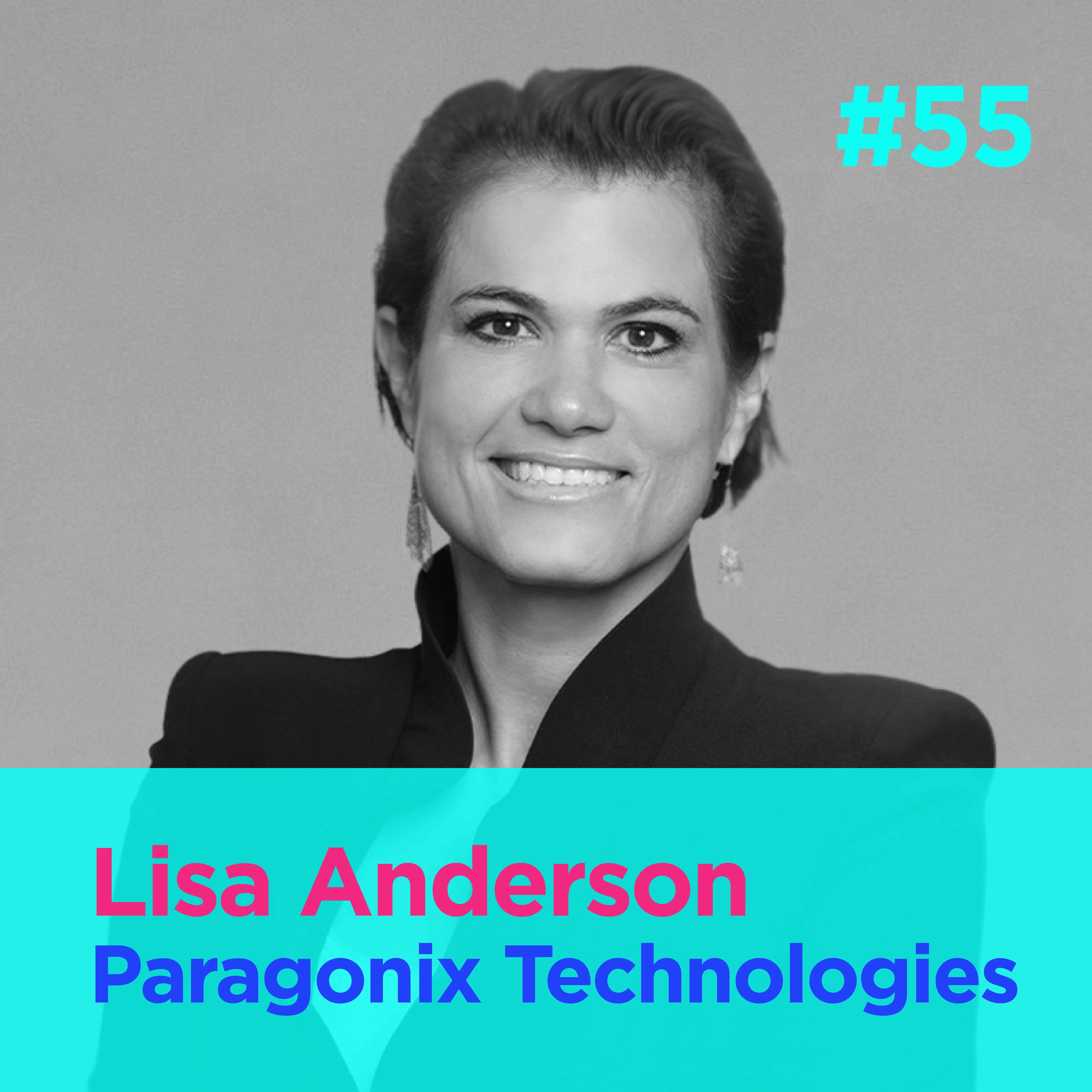
Lisa is the President of Paragonix Technologies, a company revolutionizing organ preservation and transport to safeguard donor organs, driving superior clinical outcomes in transplantation, and modernizing the standard of care.
Episode notes
Do you know how organs are traditionally transported for transplantation purposes?
In a cooler filled with ice.
When I learned that this approach was the most widespread method, I admit I was quite shocked...
We talk here about "living" organs whose preservation is crucial for the success of their transplant!
And as you can imagine, these transplants are often vital.
The good news is: some people have racked their brains and rolled up their sleeves to change all that!
And one of them is none other than Lisa Anderson, Co-Founder and President of Paragonix Technologies.
With her team, she has literally redefined how organs could be transported, wiping the slate clean of an archaic, despite standard method.
Last year, their technology was named one of TIME’s 200 Best Inventions in the Medical Care category.
A technology that allows organs to be preserved and monitored under ideal conditions of temperature, pressure, and perfusion.
Since its creation in 2010, the company has enabled the transport of over 10,000 hearts, lungs, kidneys, livers, and pancreases combined to date.
A paradigm shift, which not only allows for better preservation of these tissues during transport, but is also accompanied by a surprising improvement in transplant outcomes, and helps democratise access to them.
In this episode of Impulse, we talk about all of this with Lisa, from the complexity of developing such a system to the change management required to lead to its acceptance in the medical field.
And everything that this changes for the patients who benefit from it every day.
A conversation that dusts off a long-established medical practice and lifts the veil on a unique MedTech success story!
Timeline:
- 00:00:00 - How Lisa got into the transplantation and organ transportation space
- 00:05:54 - The criticality of organ preservation before a graft
- 00:08:27 - The parameters to control when transporting organs
- 00:11:38 - The benefits of improved organ preservation on graft success
- 00:19:01 - Paragonix Technologies’ clients and commercial models
- 00:21:20 - Sustainability considerations in the organ transportation business
- 00:25:29 - Paragonix Technologies’ plans for geographic expansion
- 00:28:00 - The journey from A to Z of an organ between its donor and recipient
- 00:30:56 - Changing practices and mindsets around organ transportation
- 00:33:20 - The engineering challenges around the creation of Paragonix Technologies’ first products
- 00:40:07 - Matching better the demand and supply of organ transplants
What we also talked about with Lisa:
As mentioned by Lisa during the episode, you can have a read at Paragonix Technologies’ latest publications here and find out more about their products and technology on their website.
You can get in touch with Lisa via LinkedIn, and follow Paragonix Technologies’ activities on LinkedIn, X, Facebook, and YouTube.
If you want to give me feedback on the episode or suggest potential guests, contact me over LinkedIn or via email!
And if you liked the episode, please share it, subscribe to the podcast, and leave a 5-star review on streaming platforms!
You can also support my work by doing a PayPal donation @ImpulsePodcast!
Lastly, don’t forget to follow our activities on LinkedIn and our website!
Full conversation
Episode transcript
Generated from the YouTube captions and lightly cleaned for readability. Names and technical terms may contain transcription errors.
Read the full transcript
But she herself is a heart transplant recipient. And then her son had a heart transplant uh uh procedure. And uh what was so interesting about her story was that she was in the elevator of the children's hospital uh where her child uh was already I think on on uh uh in the in the O to about to receive his heart. She was in the elevator and a peragonic staff member walks in with the peragonic sherper pack and she looked at the product and immediately recognized that this must be a product that contains her son's heart. Indeed, it did. And so she was she was overwhelmed with uh emotion just first of all being
very grateful to the clinicians taking care of her son that they would utilize um uh high-tech equipment for a
protection of her son's heart. Uh but also that um you know it it uh obviously the procedure went very well and her son is doing very well. Um these are the stories that really drive our team and uh there is no better story than that.
— Good. So hello Lisa and welcome to Impulse. I'm you know glad we were put in touch through Jensen whom I'd like to thank you know as we as we start this recording for making the the conversation possible today. Um, so I heard about your work for the first time when I was skiing through the the times best inventions of 2024 at the end of last year and you know it featured one of the organ transportation devices that you are commercializing in the US um the one for transporting lungs if I recall correctly and you know the thing that caught my attention um at first was to learn that the the standard way of
transporting organs was just to put them in an ice box uh for the transfer to happen between the donor and and the recipient. And you know it really appeared to me as like very archic an archaic way of moving you know such fragile and you know complex pieces of tissue from one place to another. And you know I was surprised that somehow this was you know something that we only kind of like fairly recently started to address. So, you know, I'm looking forward to learn from you um about why and you know, I'll hear as well how you and your team are, you know, spearheading that change and, you know,
transforming on transportation for for the better. Um but before we get started, um and as you know, we do on every episode of the show, I would invite you first, Lisa, to to present yourself. — Thank you, Mo, for inviting me on your podcast. Uh I really appreciate your interest in highlighting transplantation because it's certainly a fascinating field of medicine. Uh I'm Lisa Anderson. I am the president of Paragonics Technologies. Uh we are now a getting a company uh and operating under the umbrella of transplant care. — Super. — You wanted to finish? Go ahead. Go ahead. Um I uh I've dedicated uh over 15
years of my career uh to transplantation and uh and founded the company in 2010 with the intent of providing a new standard of care in organ preservation. Uh and that you already alluded to that um but this is basically meant to eliminate the utilization of ice and ice boxes for organ preservation. And where does the idea behind um you know the I mean addressing that need come from? Is that something you experience because you know a relative had to go through a transplantation or because I I think you come from a background in research in genetics and so I I don't know exactly what what led you to to to that.
— Yeah. Uh strangely I had no exposure to transplantation before a pivotal moment in my life uh when I actually saw a donated human pancreas that was donated for research. Um and uh I saw a human
pancreas that was sitting on in a box filled with crushed ice. And I think uh you know one of my colleagues uh always said that it it took a an outsider of transplants to actually realize how precious these organs are and how fragile they are on this ice storage. And so um you know uh s transplantation
has been a very successful field of medicine. Um but it took somebody from outside of transplant to really identify that issue and uh come up with new technologies and innovate in that space. — And I I was you know also thinking because what struck me is like when I was saying it's kind of like of an arcade method. Um I see you know or or I would understand that you know the way these organs are transported is extremely critical to ultimately the success of crafts and um and so I you
know before we kind of like go into understanding how you know your technology works and how it really differs from that sort of like acuric method um can you give us some you know background and context on the criticality of you know organ transplantation in in that process of you know moving one organ from one person through to another. — Sure. So I think over time um you know
there there's been a lot of research done in organ preservation showing that the hypothermic storage of organs is um
important uh cooling down the organ to reduce the metabolism and the metabolic activity of that organ during transport and and storage of that organ. But I think what's what's happened over the years is that uh you know the community kind of forgot the actual uh range of hypothermia that's effective in organ preservation. If you placing an organ on ice, ice is zero Celsius and below. Uh especially with um the buffered solutions that are used in conjunction with ice, you can uh decrease the temperature of an organ very rapidly to below zero Celsius. And I think this was just an unintended consequence. Ice was being utilized in organ preservation for one obvious reason. It's ubiquitous.
It's seemingly cheap and it's available at most uh hospitals. — So um you know the the utilization of ice definitely had uh some thinking behind it but unfortunately the conditions that ice storage creates for an organ are uh more than suboptimal. these freezing temperatures, uncontrolled cooling and then also the opposite opposite of uncontrolled warming of an organ uh is also critical. And so what we wanted to do here at Paragonics was to provide for a simple technology that allows for advanced organ preservation with tightly controlled uh moderate hypothermia between 4 and 8° C. That is what we have deter determined to be the optimal preservation temperature range for organs. Uh provides not only an optimal
hypothermic environment but also a safe hypothermic environment. Uh and this is really the the thinking behind changing from ice to a uh uh an advanced organ preservation technology that provides that controlled hypothermia. And so beyond the I guess I mean temperature is one of the parameters you mentioned I guess there are some additional variables we need to control to make or if we think about like optimizing the process like what are the other like parameters that currently you are able you know to control to make sure that and follow over time I guess to make sure that you know you have that traceability of how organs are transported — right you already mentioned uh one of
our technologies uh the barrel guard technology that uh was featured in the 2024 best invention in in the time magazine. Um this uh product adds an additional control mechanism and that is pressure. Um you know lungs are actually transported in an inflated state. So monitoring and um adjusting the pressure within those lungs is of critical importance. Um these lungs are actually utilizing some of the oxygen of the air mixture that is inside them. Uh so they deflate over time naturally but also you know many lungs especially here in the United States are flown by aircraft so they experience ambient pressure changes and that can be detrimental to a lung when the the pressure is too high or too
low. Uh so with the Baragard product we've added additional control over pressure. Um but in general uh the the
additional parameters that need to be controlled in organ preservation in addition to temperature is also the mechanical isolation and the protection of that organ during transport. Um if you think about an organ traveling for many hours potentially — uh that organ needs to be in a safe and protected environment. mechanical uh damage to those organs is possible over you know if you're putting that organ uh for example in a bucket of ice um compared to a a heart for example that is uh fully protected and fully immersed in uh a rigid um environment such as the in the paragonic shaper pack so that mechanical isolation is is key as well
and finally I'd also like to say that the perfusion of products has been shown to be associated iated with key clinical benefits. So our most recently launched product, the Paragonics kidney ward actually incorporates uh continuous profusion of the vascule of the kidney during transportation. Uh and all of our devices are monitored through uh a uh a companion app, the the paragonics app where we con constantly were reporting out the environmental conditions of that organ. — Pretty cool. And I mean I would invite the listeners to have a look at the how the boxes look like because I mean from the outside you you cannot really see you know it's it's like a closed um I
don't know it's it seemed to come a bit out of a video game to me like the the design of the case. Um and um yeah I
think I think it's quite it's quite interesting and I was wondering actually how do you um you know because ultimately like I guess each type of organ requires you know different types of parameters to control and so I was wondering how you go about you know selecting you know the types of organ for which you design a transportation device. um understanding as well that there are some commonalities I guess from one to another and um yeah how did you go about that because your first product was it for the heart or was it for — that's right yes it was for the heart and the reason why we started with the
heart uh was that um I was really intrigued and struck by the statistics of severe complications right after a heart transplant uh procedure um in some cases in geography is uh over 30% of patients actually experienced a severe complication within the first 24 hours after transplant. And so uh our hypothesis is and and has always been that if you're preserving a heart better right right before transplant, it will function better in the recipient. Mhm. — And and so we made the link between improved and advanced organ preservation at moderate hypothermia between 4 and 8° C and um and these uh and a reduction in
the severe complications. These severe complications are actually called primary graft dysfunction. Actually sounds pretty bad, doesn't it? — Uh it means that the heart requires additional assistance right after transplant. It's a life-threatening, very costly uh side effect. And uh with our product we were able to reduce in every patient population studied thus far reduce that complication by over 50%. And uh really showing that there is this link between what happens to the heart right before transplant and how that heart responds um to the new recipient uh right after transplant. — Mhm. And uh and I guess that applies to any type of organ that you're transporting right? We are indeed
material we are we are uh collecting data on post-transplant function and patient outcomes uh for all of our our organs that we that we support and we're the only uh transplant company that serves the entire spectrum of solid organ transplantation. We have products for heart, lung, liver, kidney and even the pancreas. — Okay. So there is I would say is there like an additional organ you would like to also cover through the portfolio or is or — I don't know I'm I'm uh I I hope our listeners can uh provide some info that some ideas uh we're certainly ready for expansion. — Really cool. Really cool. Um and so you
know go talking about that evidence that you're building. Um I guess you know this was initiated from from from the get-go to not I mean not only I guess demonstrate the the performance of the device but also like how it contributes to you know the the the outcomes and so you mentioned you know that on the short term this improves you know the patient outcomes because you have less primary graph rejections. um what does it change on the longer term based on what you've seen so far? — Great question. Uh you know initially our data collection effort which we um heavily focus uh on in in our guardian series of registries. We have uh
registries for sorted organs. Uh and um you know in initially we were really only focused on the short-term outcomes because we thought we're going to collect data that's uh you know on outcomes that are more proximal to the actual transplant procedure. Uh but I'm really really glad we made the decision to invest in long-term patient followup. Um at this year's uh annual
meeting of the international society of heart and lung transplantation for example our investigators reported out on survival and mortality data of uh
four years. So uh they were looking at patient they were studying patients that had a heart transplant and lived with that transplant for longer than four years. And what's really remarkable is that the patients that received a heart in the paragonic sherpa pack had a uh greater than 50% reduction in mortality. Um and that was highly significant uh even at the one year, 2year and threeyear uh mortality uh analysis. So
what this really tells us is that that protection afforded right before transplantation is so important for the long-term uh longevity of those of our patients. And if you think about it, it's actually quite remarkable. A heart may only be uh protected by our device
for let's say on average four hours. Mhm. — But you can measure that impact that hour those 4 hours of of advanced preservation between 4 and 8° C. You can measure that uh outcome four years later in in in the form of a reduced mortality. Uh I think that's that was quite a remarkable release of data this year. — And so I guess one of the consequences well of uh having a better control on some of the critical parameters. Um I I would assume that this also extends the sort of like duration of transportation that can be used. So like for example you would be able to have graphs that
happen you know I don't know exactly and I guess depends on the type of organ how much time you have between the moment where you take the organ and the moment where you place it back but if you have a transportation means that allows you to better control those parameters then you can extend that time period and ultimately maybe you enable you know more people to to benefit from graphs — right Um you yes uh what you just said is exactly right. Um basically with advanced preservation you know almost any geographic barrier in terms of time um is is eliminated. You know lung transplantation for example was a pretty regional um uh uh we had regional reach
right uh previously uh with with the utilization of our products. transplant centers now have access to lungs all over the United States for example. And then of course we we have the the many stories now where uh hearts are flown from coast to coast or lungs are flown from Alaska to Boston and Massachusetts or livers are flown from uh the west coast to uh to centers in uh in Florida.
So uh the extension of time has really contributed to uh transplant centers and their patients gaining greater access to organs and uh being able to really pick that right organ and fast and get get the patient off the weight list faster um than than previously. — Very cool. Um I was wondering so the the customers of yours are they um hospitals like how is the who do you sell the products to and what are also like the I was curious you know when we talked about evidence um yeah what what are they looking for? I mean I understand very sort of like clearly what the value proposition is because this next to an ice box I would also
choose that. — Um so I want wanted to ask you more on the maybe the business model how is this working? Yeah. So we sell our products to um hospitals that have a transplant center. So our transplant center since are our customers but we also uh in in kidney we sell our product to organ procurement organizations — uh that pays kidney in the the peronics kidney ward. Um so this is really um you know a a uh a transplant center is generally in a highly specialized uh hospital environment. So uh in the large metropolitan areas you'll mostly find those transplant centers and uh but we also have developed a uh network of uh
product hubs so that we can deliver on demand our products to the site of donation. um you know any uh hospital with sort of SU capabilities can um can be a donor hospital and uh we really had to figure out the logistics of how we get our products to where they're actually being utilized right because um yeah in the in the over the last two or three years hospitals have now shifted in the United States from going out to procure the organs to calling a a third party vendor or IND industry to procure organs. Uh and we have a a large service division with uh surgical staff, surgical assists, preservationists that
uh basically can take care of the recovery of an organ for any hospital um in the country. And so this is really a combination of uh making sure that we have the logistics in place but also we've added uh services uh to our product to our offering so that we can um make this quite easy for transplant centers to to gain access to an organ that they normally couldn't get because their team is not available or they just find it a way more cost-effective way to um have industry um involved in the process. Understood. And then is it a leasing model where the the devices are like leased to the clients or it's like
it's really sold as a as a device and then you know used and then you have the service on top that come next to it. But — yeah, — um it's a great question. Uh you I know our products look so beautiful on the website, but you uh you probably didn't notice that they're actually all single-use disposable devices. Uh so they are uh they're disposed of right after transplant and there's no return logistics required. Um with our devices being single-use disposables, we also eliminate any kind of risk of uh trans transmission of infectious uh diseases between uh hospitals or or patients. — Okay. And is there a is it part of the
vision to have a version of it that of those that are reusable or it's really something that due to I guess regulatory constraints or like laws that's actually not possible. I know like I'm French and I I guess it's really something that in France they would be hard to to get to for different reasons. Um so yeah I would be curious. I I didn't know that they were not reusable. — Yeah. Yeah. Um actually we have a lot of um wonderful customers in France uh for our peragonic sharper pack. I think it's really um become a new new standard in hard transportation in France. Um but coming back to the the single-use
disposable nature of our products, — you know, when organs travel large distances, — um the return journey of a capital piece of uh a piece of capital equipment — um is significantly uh impacting the environment too. Uh but
uh just to reframe this in terms of um you know let's let's take the sustainability just from a product standpoint uh aside — you know what we've been able to do with the benefits of our products is to actually change the mode of transportation for many organs. — Uh you may know that many transplant organs actually fly in private charter aircraft. uh and private charter has of course a very large uh negative impact on on the environment — and so when you when you actually do the calculation um it's it's quite shocking uh how how bad private charter is but of course you know many patients are relying on utilization of uh a mode of
transportation that has that kind of impact um we've been able to switch a lot of private charter for transportation to commercial aircraft. — Yeah. — Or to driving. To your point earlier, you talked about uh increasing geography. — Well, if you can if you have more time, you can switch from private charter to a commercial aircraft or you may be able to decide to actually drive that organ uh from the site of donation to the transplant center if you have an additional 2, three, four, five hours of time. And so when you think about it, switching from private charter to commercial aircraft has an incredibly positive um impact on the environment. And um and
the third point I'd like to make on that uh on that topic is that uh by switching from private charter to commercial aircraft uh you know one of my colleagues did did the calculation we can actually make hundreds of our products by just eliminating one private charter flight uh for for an Oregon. So
uh this is the way we we think about it and of course you know you already mentioned regulators our regulators are also very concerned about disease transmission. So making sure that there is no uh so eliminating that risk I think is is well worth it. — Yeah. No really interesting. I I really didn't have that um yeah that thought. So I'm I'm I'm happy we we touched on that. You also mentioned so that you have clients in uh in France. I was thinking about you know because ultimately I think now you're surveying very well the the US market — and I guess the vision goes you know beyond um the US because it's organ
transplant transplantation I guess is everywhere and so I wanted to hear your thoughts about you know maybe geographic expansion and how you what's your vision there. — Yeah this is a great topic ro and I love it. Um geographic expansion is something
that we are now able to do uh being part of a multinational powerhouse medtech company like Getting — um as you know we uh we were acquired by Getting in September of 2024 and really the last 12 months we have primarily focused on this O US expansion so that we can serve uh more patients on a on a global basis and um and we're really looking forward to that uh uh expansion
uh with our getting a colleagues. Um and uh so we we're putting all of our efforts right now into launching new products such as the the barrel guard device later this year in in Europe um and uh and adding additional products to our offering in in Europe and other geographies too. In that process, do you face similar challenges as you faced for the US market or it's or there are like some completely new um let's say challenges or hurdles? — There are definitely new challenges. Um we uh just from a clinical perspective um the the donor and recipient profiles are not uh the same as in the United States. Yeah. So as we look towards data
collection, we're very careful in ensuring that uh we can show clinical value proposition for these patient populations and donor populations. — And uh uh you know obviously like uh
like every other medical device company, we face a a little bit more of a fragmented market uh in in Europe and um
you know in the United States you have one single transplant system in Europe you have multiple. Um so it's certainly a a different business environment, clinical environment uh and how we how we deploy products across countries. uh certainly as well. — Mhm. And I was um I had some questions maybe on the I don't know exactly how the process works you know for example when an organ is collected like what how is this done what's what's happening and then once the organ arrives at the let's say the recipient site how are the medical teams you know using basically your your your device and how you know how does this transfer
happens between moment where it's taken and the moment where it's delivered. — Yeah. You know, donation and transplantation is uh is a fascinating field because in one day you're part of somebody's worst day in their life and — somebody else's best day uh in their life potentially. — Um the clinical decision to use our product rests with the implanting transplant team uh in heart. That's the heart transplant surgeons and cardiologists and and their counterparts across the other solid organ systems. Um so it's a clinical decision and uh the utilization of our product uh will uh really depend on a
clinician making that call very early on as they accept uh an organ. And what's really neat and and interesting to see is that um because of the availability of our products, clinicians are often making a different uh decision than they would have made several years ago, right? They're of more often saying yes to certain types of organs or or distances that these organs have to travel because they know um this advanced preservation modality with paragonics will uh ensure that that organ is protected and will make it safely um to that recipient. So um the
way it works is that organs are offered according to a certain type of algorithm. uh a clinician then reviews that organ uh and then either accepts or declines that organ. Once that organ is accepted, a whole host and the myriad of processes kick off to uh create and and schedule the logistics around that uh donation. So this has to happen both at the donor hospital but also the recipient needs to be called into the transplant center. SPIN might be you know on vacation or sitting at home or might even be in the hospital but there is a a lot of logistics that needs to be arranged and a lot of different
teams have to talk to each other to ensure that that process is aligned and uh that everybody is where they're supposed to be um at a at a given time and then ensuring also that the clinical information is relayed appropriately as well. Mhm. And so if you think again about like let's say the early days or when you had a sort of like first version of the the the device for um for
heart transportation like was it was it difficult to con like to convince health care professionals and surgeons to use that technology or because I know that in summaries and I cover like a lot of different topics in the on the podcast and for example when we talk about like digital health solutions the topic of evidence and clinical adoption I think that's coming up very often. But there it's a bit I guess different. It's mostly you know hardware and yeah I wanted to to to hear a bit about um your reflections on on that — material. It was hard. — It was hard. — Um and I tell you why. Um you know when
we launched the our first device heart transplantation had been around for many decades right — the system worked. It was a it's it's a life-saving therapy and um you know coming to the clinical community with a new angle of on on uh on uh organ preservation uh was was something that they hadn't been exposed to previously. Right? So it's a it's it was a new market uh that uh we as a as industry together with our industry peers have have generated. So a new market was was created. There was no spending in that market either. So we not only had to create and launch new products but we also had to create the
market. — Um and that involved a lot of education. um you know coming to a transplant center as new industry as a startup uh and saying hey I can reduce your complication rate you know one might hear as a first answer well I don't have any complications right so even even uh aligning with clinicians on the definition of what that complication was um you know that those were all hurdles that we had to overcome um to um to uh
to sell the value proposition of our products. Um so it's um it certainly was uh an interesting path that involved a lot of scientific data, clinical data and that's really where uh you know we I believe retrospectively have made a uh the right decision to give back to the clinical community the understanding of how advanced preservation would impact their programs and patients. Um so uh you know that is certainly was certainly a very important um uh uh activity for
us. — Yeah. And from a technical perspective when developing let's say the first versions of the device like what what were the the most difficult things to to achieve because — I would assume I mean naively that for example temperature control is probably not so difficult. I don't know. — Yeah. Yeah. Well, if you think about it
uh from the standpoint that we had to consider a lot of different things, right? So before I even contacted the first engineer that I worked with, — um I spent uh almost a year just shadowing transplant teams and seeing what they're doing. I really wanted to understand the challenges and what I would be up against uh in this uh new markets that uh I wanted to create. And one thing was very clear from my observations was that if I were to
create a product in heart preservation for example, — I needed to be simpler in terms of utilization of the product and ice because there were there's no time. This is a very very time-sensitive uh process. — So our devices are designed in mind that
uh anyone at 3:00 a.m. in the morning can put the device together and put an organ safely into the device and transport it to the recipient side. So this was this was of of critical importance to me and the company that uh we wouldn't overengineer anything. We wouldn't create uh features that weren't necessary. And you know when I went out the first time and asked the clinical community, what do you want in an advanced organ preservation device? I got a list of 200 things. — We picked one and we do one really well. That's what that's what our team aligned on. Um and then how do you do that? So it's
— there is no room for error, right? So it's it's it it even if uh uh there were something to happen uh we we would have a device that would protect that organ during transport. So we chose for example passive cooling technology — not battery operated technology because you know what batteries fail. — Yeah. Yeah. — Um and then we had to think about well how do our organs travel? Well, that organ might be coming from Alaska going into Florida. How do we make sure that uh external factors aren't impacting the functionality of the device? Um and then you know with that uh and also you know our the connectivity with with our
digital platform how do we ensure that we continuously report out data so that the entire clinical team has eyes on the critical uh factors and parameters of the organ during transport when they're not there with the organ. — Uh this is highly precious cargo and devices cannot fail uh in in uh in that environment. — Wow. No, I'm glad we touched on this because it's it's it's it's it seems to be like a, you know, a huge um technical challenge — and I'm I'm quite impressed, you know, to see that, you know, now we are able to to to do that on you for for many different organs. Um, one of the
questions I also had was, you know, if there were like, you know, healthare professionals or patients in, you know, in waiting for, you know, yeah, to to get an organ or something like that. uh and who would be interested in you know using your technology uh what would be you know a way for for them to access it. Yeah, I mean for for the Paragonics products, please visit our our website uh at paragonics.com. Uh we have a lot of resources on our website. A lot of the uh clinical literature is on our website and uh uh we uh we also have a a form on our website where you can contact the team
or or call uh call our number here at the headquarters in Walter, Massachusetts in the US. Do you see a lot of actually patients pushing for this where you know they see that they know they're also in waiting for for a graft? Um — yeah. Yeah. It's an it's a really interesting uh question. We um you know
patients when they're waiting for a transplant they're they're generally very sick, right? — Um so they will rely on the clinical decision of the the clinicians that are taking care of them. Um but we actually had a uh an incredible patient story
where a uh mother her name is uh Dr. with Britney Kborn. She uh she shares the story on social media, but she herself is a heart transplant recipient and then her son had a heart transplant uh uh procedure. And uh what was so interesting about her story was that she was in the elevator of the children's hospital uh where her child uh was already I think on on uh uh in the in the O to about to receive his heart. She was in the elevator and a peragonic staff member walks in with the peragonic sherper pack and she looked at the product and immediately recognized that this must be a product that contains her
son's heart. Indeed, it did. And so she was she was overwhelmed with uh emotion just first of all being very grateful to the clinicians taking care of her son that it would utilize um uh high-tech
equipment for a protection of her son's heart. Uh but also that um you know it uh obviously the procedure went very well and her son is doing very well. Um these are the stories that really drive our team and uh there is no better story than that. — No thanks for sharing that. I was thinking you know so we talked a bit about like the increased excess that you know paragonics to some degree enable for organ transportation like um and I don't know exactly you know what's I assume that there is obviously probably a mismatch between offer and demand and it's um it's always you know quite uh quite tricky um do you see like other
opportunities to improve access to um to organ transportation organ um sorry crafts basically. Do you think it's something I know that I mean in the country I'm from there's been also some political decisions around yeah should we make everybody an organ donor by default uh where you know you have to basically declare whether or not you you want to to um give your own organs and otherwise if something happens by default you would be you wouldn't be you know suitable for it. Um, are there certain Yeah. initiatives or things you see or believe in that might might improve that situation? — Yeah, first of all, I would I would encourage everyone to consider becoming
an organ donor. You have to sign up. Uh, it's pretty easy in most countries. — Uh there's a website and it's generally done in just seconds of your time. So uh for anyone listening, please do consider becoming an organ donor so that uh you know once they're no longer useful to you, they may be useful and save somebody's life. Um you know there are technology um uh approaches to even
further increase the utilization of organs. We are working on several of those approaches uh such as you know giving more time to an organ outside the body or uh um uh enabling the
utilization of what's called extended criteria donors uh these might be donors of a a higher age or with some co-mobilities etc. Um so that's certainly a way um and uh in ensuring that uh really every possible organ that can be transplanted actually gets a yes for transplantation. So there are certainly many uh technological approaches as well. Um in addition to just a general call for uh everyone to becoming an organ donor and joining the registry list. — I have the impression as well that there's one um one sort of like space that's not really research. which I think it's already it's also in clinical use which is the what we call
xenographs. So it's grafts from basic animals to humans. Um do you think at some point this is something that can be of relevance to you know your transportation devices and that really has you know potential? Yeah, it's a that's a very interesting point that you know these organs will need to be transported as well from the site of where you know where the farm is or whether where these organs are uh recovered uh for transplantation. I certainly see an application there as well. Absolutely. — Really cool. No, then we'll we'll keep an eye on this. um you know I'm getting towards the the request rec recurring questions I have and um I'm think I
think it's quite a fascinating field and I'm really you know happy we could have that that conversation um so you mentioned you know um for listeners to to look into the website um are there like some other resources you would recommend them to check out to know more about you know the field in which you work — yeah um you know most um National uh organ uh uh donation systems have really
good websites with a lot of information on there. But I'd also encourage you just um uh look up certain transplant centers because uh many of them are involved in uh really cutting edge research both from the scientific as well as clinical aspects of transplantation. Uh and many transplant centers have a whole host of um resources on their website. Um so certainly uh you know if you if you do an online search you'll you'll be uh exposed to a lot of information on transplantation. — Awesome. Yeah I'll try to put some some links in the in the show notes. Um so you mentioned one story already about um this mother and this son who
benefited from you know heart transplant. Is there an addition another anecdote you'd like to share that made you you know realize the the impact that you you had on people's lives? — Yeah, we um you know every Monday morning uh our team meets uh for sort of
an an all hands uh meeting and uh we do celebrate the uh the number of of lives that we impacted in the week before. Um I think the the most inspiring stories are those where clinicians kindly share with us that um this organ would not have been transplanted if it hadn't been for our technology — and this patient would not be alive if uh it wasn't for our technology. Um I just literally actually came off a call like that before I met with you M on this podcast where uh one of my colleagues shared a story like that. Um I can tell you one thing it never gets old. It is every time I hear it it is
the most beautiful thing and u to have a career where you contri contribute to saving lives every day. Uh I can't think of uh anything more fulfilling from a Korea standpoint. And um I encourage our team to share these stories among themselves because uh transplantation is a uh uh time consuming and uh often very stressful
job — um 24/7 365 job and um I'm so grateful for our team to um have that passion to really deliver that life-saving impact every day. — Really nice. So, if you would recommend, you know, a fellow healthcare innovator as a as a potential guest for the show, um, who would that be and why would you recommend her or him? Also, potentially, you know, in a very, I mean, still, I guess, you know, in healthcare or in medtech, um, but potentially in a yeah, very different space than where you work. — Uh, oh, uh, you caught me off guard here. I mean there there are many you know I uh I really admire innovators but
I also admire many uh CEOs that actually make these products a success in the market. So I can certainly follow up with you on on names in both categories. — Sounds good. Lisa, thank you so much. I really learned a ton. I was really, you know, curious about your technology and um yeah I I think it's quite you know impressive and in terms of impact I think that's that's also very impressive too. Um so yeah thank you so much. Uh I
hope you know our paths cross in in person at some point maybe at one of the these medical devices um conferences. Maybe there are know some specific ones about trans organ transportation that I for the for the moment probably will won't be attending but yeah maybe some other ones — that would be wonderful. Thank you so much for your time and your interest. We really appreciate it. Thank you.
— Thanks for watching the episode. I hope you enjoyed it.