24.11.2025
#54
Hannes Klöpper
HelloBetter
Making the smartphone a psychiatrist
Listen on your favorite platform:


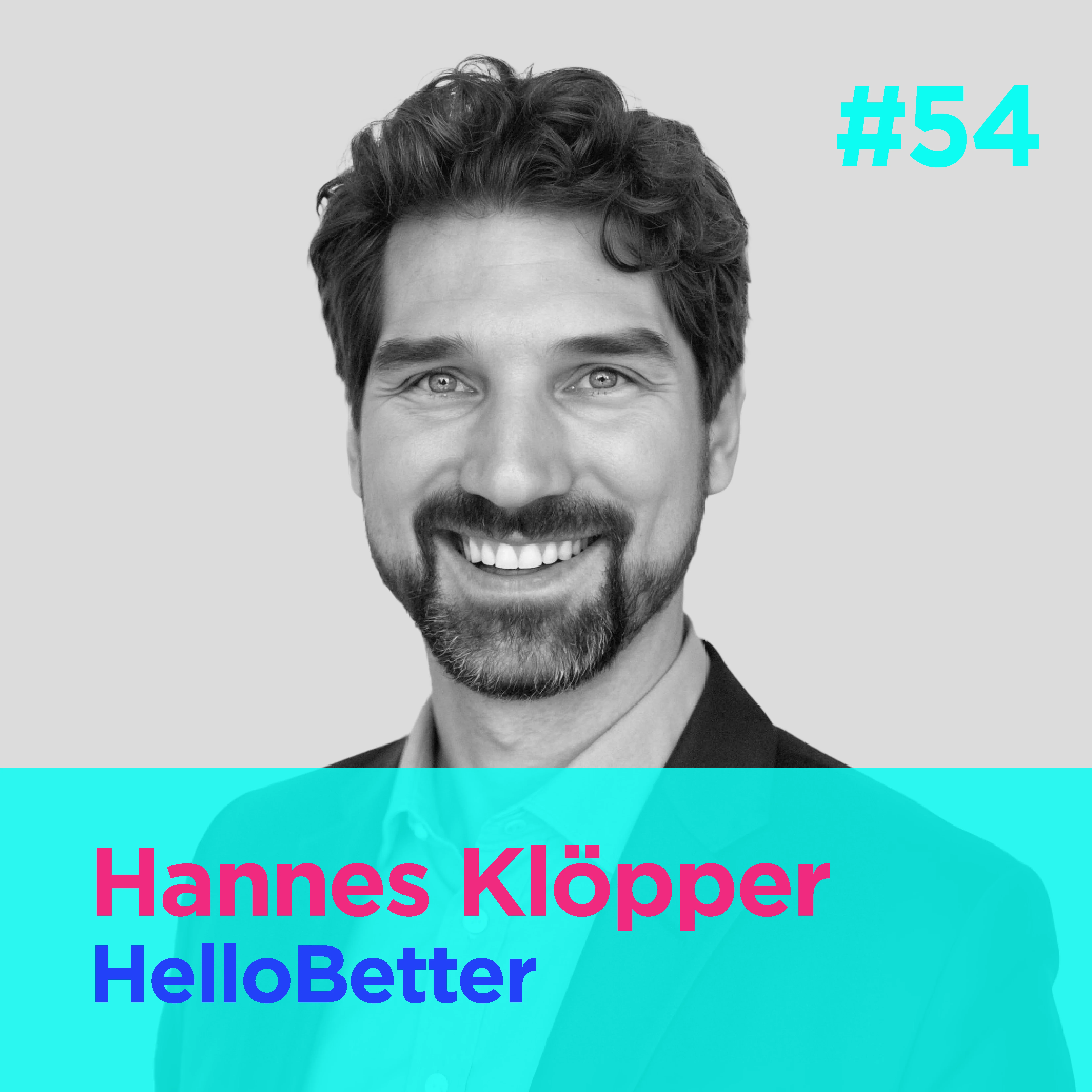
Hannes is a Health Innovator and CEO of HelloBetter, a company pioneering prescription digital therapeutics technology to treat mental health disorders, driving accessible solutions in psychological care, and modernizing patient therapy.
Episode notes
While studies have yet to prove a direct causal link, the correlation between smartphone use and declining mental health is well-established, a trend especially concerning among young people.
But what if the same technology contributing to the problem could also be the solution?
It turns out the therapeutic potential of our smartphones for mental health is no longer up for debate, and one company at the forefront of this revolution is HelloBetter.
In this episode of Impulse, we dive into the fascinating world of digital cognitive behavioural therapy with Hannes Klöpper, its Co-Founder and CEO.
Hannes breaks down how his team developed one of the world's most extensive portfolios of digital mental health therapies, covering conditions from depression and burnout to panic attacks and vaginismus.
These treatments demonstrate how digital-first solutions can be remarkably effective, prescribable by healthcare professionals, and accessible anytime, anywhere.
We also explore the game-changing potential of AI and Large Language Models (LLMs) in mental health, and how they are opening new frontiers for preventing and detecting mental health symptoms early!
Timeline:00:00:00 - What drew Hannes to the cause of HelloBetter00:05:55 - The power of delivering cognitive behavioural therapy through a smartphone00:11:50 - How HelloBetter supports patients as an intervention for mental health distress00:16:20 - The mental health conditions for which HelloBetter provides digital therapeutic programs00:20:24 - How the therapeutic performance of HelloBetter’s programs is evaluated00:25:39 - The duality of smartphones as vectors of mental illnesses and vehicles for their treatment00:28:54 - What AI and LLMs change for mental health care00:39:15 - How Hannes keeps his own mental health in check
What we also talked about with Hannes:
As mentioned by Hannes during the episode, you can have a read at Exits & Outcomes, Second Opinion, and Healthtech Off The Record, three newsletters that provide in-depth insights and news about the healthtech business.
You can get in touch with Hannes via LinkedIn, and follow HelloBetter’s activities on their website, LinkedIn, X, Instagram, and Facebook.
This conversation is part of Impulse’s exploration of how science, medicine, and technology are transforming mental healthcare.
If you want to give me feedback on the episode or suggest potential guests, contact me over LinkedIn or via email!
And if you liked the episode, please share it, subscribe to the podcast, and leave a 5-star review on streaming platforms!
You can also support my work by doing a PayPal donation @ImpulsePodcast!
Lastly, don’t forget to follow our activities on LinkedIn and our website!

Full conversation
Episode transcript
Generated from the YouTube captions and lightly cleaned for readability. Names and technical terms may contain transcription errors.
Read the full transcript
One is that someone who used our panic program and um she could not ride an elevator. She was you know afraid like really had panic whenever she got into an elevator for decades. Um and really struggled with that and then she used our program and you know after 10 weeks I think she was basically cured and you know she's now riding elevator every day doesn't have a problem. Why do I like this anecdote? because it's so dichomous, right? If someone tells you, "Oh, yeah, I used the program and I feel better now." — How worse did they feel before? How well do they feel now? It's kind of hard to
judge, you know? It might be different uh interpersonally. You know, people have different perspectives. But, you know, if you can use an elevator or not, that's a very like either you can or you can't. And if you can now and that's amazing. So,
[music] — cool. So hello Annis and welcome to Impulse. Uh I'm glad we can you know have that that conversation today. I've been wanting to do an episode about um you know mental health for quite a while now and you know especially on these digitally uh delivered therapies which seem to have you know taken off over the past years and you know I'd be curious to understand how they work uh how they are developed uh how they interfere as well with you know some of the things that are causing I guess mental health issues especially our let's say our relationship to screens and our addition new addiction to to smartphones and
these type of technologies. is um so among you know all the key players in the field you're certainly you know one of the most um qualified persons to talk about this topic so I feel you know lucky to have you um on the show I'd be curious to you know hear as well your perspective on you know the trends you see in terms of you know mental health globally I feel like in the pandemic uh we went through 5 years ago um kind of like helped um to put the topic at the center of like the public debate for for better or worse and you know I have the impression that you know we hear about
it more more in different places you know in the workplace in sports relationships and so on and you know when we consider um all the things that are happening you know in the world um I doubt that we will get rid of the topic anytime soon um I think another important topic that we would like to explore as well that you know we just discussed before hitting record is you know the relationship or the link let's say to you know LLM's and AI to how you know these therapies are delivered and how we interact with this type of technologies. Um so yeah, many things but all of this to say that you know I'm looking forward
to our chat uh and you know to kick things off and make our listeners familiar with know who you are. Um I would invite you for a sentence to to present yourself. — All right, thanks for having me. Um yeah, Hasker CEO Hello Beta. I um built
a company in the education space prior to um working on on building Hello Beta. And one of the things uh that I learned there is that um in education it's very hard to prove that what you do works. I mean the in terms of um the business opportunity the things that take off are test prep, language learning and things that promise you to get you a job with a money back guarantee. But if you do something that's um uh a bit less specific then it becomes very difficult to to prove the effectiveness of uh of
the learning experience. And one thing that really appealed to me about uh about the healthcare space is that you can run randomized controlled clinical trials that show that your product is indeed effective. And uh that's what led me to join the original sort of academic core founding team of Heleta who's done you know a decade of work in this space prior to me joining uh proving in one clinical trial after another that this approach of translating cognitive behavior therapy into a digital product experience was indeed effective. And um so in 2019 uh I helped them to um yeah
raise funding and turn the the small spin-off company that they' built into a venturebacked technology company. Um that's what we've done over the last couple of years. Uh we now raised 30 million in venture funding and grown the company to over 150 people uh present in Germany, Switzerland and France. And uh yeah now of course facing in um yeah an somewhat unexpected uh when we started out and at the same time awesome opportunity uh with you know AI technology revolutionizing the core modality of mental health which is having a conversation — really cool I was wondering you know what was the kind of like starting point for those um let's say the founders you
mentioned that worked on building that or doing that research work, that ground work um before you joined. Um did they see like early on the potential when you know I don't know smartphones came out maybe like in the middle of like the 2000s to say well maybe is there like is there a way we can interact with people through those technologies to help them and solve mental health conditions? Yeah, I mean cognitive behavior therapy is a is a fairly sort of formalized process where you know you kind of we we know what uh you can do in order to
change how you feel. I mean that's what cognitive behavioral stands for. It's a you know change what you do to change how you feel. And um it's a bit like you know losing weight. We know what you need to do. You need to exercise more and you need to eat less. But actually doing it is really hard. And what we do is we take it by the hand and help you to do the things that are hard to do uh if you are suffering from uh from mental health condition and help you do them over the course of u several weeks. And it's surprising how over the course of two three months you can really reduce
the level of symptom severity. What we found in clinical trials is that these um largely self-help solutions I mean there is this clinical psychologist uh sorry this psychologist involved that gives you feedback on your progress but it's written as synchronous so quite light touch it's largely a self-help solution that this is indeed um generating effect sizes that are comparable with those that are achieved by facetoface psychotherapy — and in a way u I just had that thought but um is there like one The reasons why these programs are appealing to people is that somehow there's some kind of I don't know if there's like a stigma but some people I guess are fearing to go
directly and talk to someone in person. Maybe it's easier to you know have a chat maybe on the I don't know like and you will explain me like how the the programs really work but maybe I would say like having those type of like digital therapies lower the barrier for people to seek for support if that's — Yeah. I mean for some people [clears throat] the anonymity is really part of the appeal right I mean there'll always be people who want that personal relationship you know looking someone in the eye and working with them talk about their problems you know if you are really uh going deep you know reflecting
on your family history and your relationship with your parents and things like that that's probably you know uh something that you want to do
um working with a person but you know when it comes to CBT as I said It's a sort of a a treatment regimen where you have to follow certain steps and you know someone can explain them to you but you can also read up on them yourselves and you know use multimedia content to kind of guide you through it and um that also works and um yeah and then there are some people that don't want to sit across from someone and you know talk about how bad they feel and open up and for them uh yeah this this the private doing this in the privacy of their own home uh is is a real
advantage. — Mhm. And so to make it very concrete for our listeners when we talk about these you know digitally delivered therapies to support the mental health conditions like you know stress, depression and and some others. Um can you explain you know on the principles that you mentioned regarding cognitive behavioral therapy like what are the types of exercises or the types of content that you share with them and how do you engage them in you know getting better? Yeah, I mean the way CBT works is really about um helping you break out of vicious cycles. Often times uh we are stuck in vicious cycles when you know people that suffer from
mental health conditions they um uh do or don't do certain things and because they do them or don't do them — uh they do even less or even more depending uh um on this. So, so, um, you know, if if you're depressed and you feel bad and you have low energy, um, you don't go out, you don't meet your friends, you eat badly, you probably don't sleep well, so you have even less energy, so you go out even less and you meet your friends even less and so on And conversely, you know, you can turn that vicious cycle around and turn it into a virtuous cycle where, you know, we help you to understand how
important it is to uh, you know, put yourself out there and uh um and yeah, not get stuck in this vicious cycle. And so, even though it feels really hard in that moment, we encourage you to take that step to go outside, you know, in the park, go for a walk, you know, hear the birds sing, see the sunshine. Suddenly, you know, you feel a little better. You have a bit more energy. So, actually, you know, you you take the next step. Maybe you cook yourself a healthy meal. Uh, you know, go to bed early, get a good night's sleep, and then, you know, one step after the other, you can kind of dig yourself out
of that hole. And, um, similar principles apply in other conditions where, um, yeah, we basically help you go through a three-step process where you reflect, you know, how do I feel? Why do I feel the way I feel? what you know what is it that I'm struggling with? Then there's a bit of psycho education where you we help you understand um you know how these conditions work and how these vicious cycles work and how you can break out of them and then we teach you concrete strategies and tools with which you can um yeah take the first steps to towards a better tomorrow. I mean that's actually the the core value proposition of the name Hello
Better. Say hello to a better tomorrow. — Sounds good. And um so these programs are like delivered over you mentioned like couple of months. So I have an impression it's quite short in a way because I I mean I know people were in therapy for like you know years. I don't know if they should like change therapist but it's kind of like a longterm process. I have the impression. So my question would be like how do you also accompany the patients and the people who went through these programs like you know longer term is there like a yeah a longer relationship that you establish with them as well? Um, not necessarily. I mean, the the the
the point of these programs is to teach you how to change your life. And, you know, either you do that or you don't. And you do, it can be very effective. And uh, it's not a panacea. It doesn't work for everyone. You know, you have to be motivated. You have to take the time to do it. But yeah, if you follow the steps and do what the program teaches you, you will find that you can feel dramatically better. And um yeah, that's that's the point of program. So we we don't it's not a subscription model. We don't try to, you know, become your life companion with with this product. um it's really
more of an intervention that uh you know explains to you um how this works and what it is that you can do and then it's up to you to do it. That being said, we are in the process of launching an AI companion product that's more of a sort of um yeah mental health life coach and
that's uh that's a product that you know you would use for the long term and that could help you secure the gains you made and and avoid uh relapsing into um into
a state where where you you are not well. So you so this would be moving away from like the therapeutic program or you would still that would still be considered as like as a medical and a clinical program. — So the digital therapeutics uh the treatment programs that we've been discussing so far they are CE marked medical devices uh with regulatory approval in Germany that can be prescribed by a doctor or therapist and they're covered by public health insurance. uh the program that I just mentioned the AI coach um that's
um a wellness product it's not a medical device it's not a treatment um we aspire to move in that direction in the long term you know generate clinical evidence and then um you know make it a medical device and hopefully eventually also go through re uh through regulatory procedures um to yeah get it reimbursed but we're not there yet so we are starting out more in the pre-clinical as in space where you know your symptom severity isn't such that you'd fill the diagnosis criteria for mental health condition but maybe you already feel or facing some challenges or you want to prevent the you know getting to a point where where
you would be considered to fulfill the diagnosis criteria. So so yeah it can help you um deal with you know challenges. So it doesn't uh get out of hand. I mean often times people when they end up at a psychotherapist they've been suffering for years and years. Like the average duration for depression for example is 5 to seven years. — Yeah. Yeah. Mhm. Yeah. Exactly. So that was my kind of I mean one of the question I had was um because this is like prescribed you know by doctors and you know medical professionals. Um I was wondering if
there was also certain incentives that you had through the programs the way maybe they're designed or the way they are promoted or presented that you know incentivizes people to seek for support earlier than by traditional let's say roots. — Yeah. Yeah, I mean one way it does that is that um yeah, it's it's more accessible, right? If you want to see a therapist, you really have to put in some work and you know often times have to wait for an average six months to um yeah get a — just to see someone. — Yeah. To to get therapy. And um here the
threshold is much lower. I mean if you want to try this in Germany just go to your doctor. you get a prescription, you can start straight away. So in that sense um yeah these programs um are definitely more accessible than than traditional therapy. And then there's the other aspect that it's you know um nationwide 24/7. That's another big factor of course that you know uh traditional therapy typically um yeah is much more constrained. — Yeah understood. And at the moment among the clinical programs that you are basically proposing um which conditions are being addressed exactly? — So we have 10 different DTX uh this digital therapeutics programs uh covering a very broad range of
conditions. Um we have stress and burnout panic chronic pain a depression treatment for diabetes patients. So people one quarter of all people with diabetes uh suffer from depressive symptoms. Then we have a treatment for vaginismas. Um we have a treatment for
depression. This is sort of general depression program for um for everyone. And an alcohol treatment not so much alcoholism but more like you know how you can moderate your drinking.
— Mhm. Understood. and um the the way you kind of like went about selecting which you know conditions among I guess there's there's a lot of different conditions that come into the the mental health let's say bucket. Um how did you go about you know selecting them and how did you go about designing these programs to make them you know as effective as possible? I — mean they this all grew out of university research. So each of these programs uh was a PhD dissertation at
some point. So it was a research project by someone who said okay I want to take the principles of CVT work with the leading researchers in the field and translate the um the insights that they generated about the condition and how to treat it into a digital product experience. and um that's how the programs were initially designed and then also uh assessed in the form of randomized controlled clinical trials. So the portfolio that we have today is u um not wasn't super
strategic that you know these conditions made perfect sense and you know uh um yeah whatever distribution perspective and sales and marketing and so on but rather like where is there a high patient need an unmet patient need where there are lots of people suffering and there is no specialized treatment available. Um or you know what is also a very common condition and then you know uh
how what is it that we can what we believe we can treat very effectively in this kind of online format you know because yeah some conditions may be more suitable to this kind of treatment than others. So take vaginismas for example. It's a it's a vastly underdiagnosed condition vaginal pain or penetration pain that women suffer um during intercourse but sometimes also you know just inserting a tampon and it's it's highly stigmatized. There are very few specialized u um
clinicians who can who can treat this. Um and yeah there we thought okay this is a um a topic that because you know it's also something we're doing this in private at home um is a good way
to to provide treatment that this would be very suitable for this kind of approach. — Mhm. And I mean obviously one of the things your company is you know known for is like the and you mentioned it at the beginning the body of evidence that you have been able to you know generate over the the years that also justified you know I guess the obtaining you know reimbursement and you know the the adoption and the recognition by professionals that that you that you've gotten. Um can you explain us you know how or let's say the in general like how these or the type of outcomes that you are able to
achieve because I I understand these are like patient reported outcomes you know you self- evvaluate how you feel between the moment where you start the moment where you end so there's a bit of I guess subjectivity um on on that and so I would be yeah I'll be curious to understand you know how how that works. Yeah, I mean this is not how we measure things. This is how things are being measured in general, right? I mean the uh whether or not you have a depression
and you know when a doctor or a therapist diagnoses it, it's evaluated in the exact same way. You are being asked how you feel and then you you answer those questions and then you know each question comes with a score and you the sum of that score of those scores um you know shows where you fall in on a scale of symptom severity and then that either qualifies as you know mild, medium or severe depression for example and uh this is also how we do it in clinical trials. So there are um valid established instruments um that is questionnaires um that yield these results that you know are um recognized by the WHO the
World Health Organization that are being used to assess the level of symptom severity of a patient prior to the intervention. So before they start our program, during the intervention and after the intervention and then also um you know often with a follow-up of six to 12 months later to see whether the effect is stable and um so those are being administered uh um to the patients that use our programs as well as to a control group that doesn't use the program uh to see you know how the two
groups or the the level of symptom severity in those two groups develops over time and typically in many mental health conditions um you kind of revert back to the mean. So the average level of symptom severity goes down even in the control group that doesn't receive a treatment. And what you have to show is that the difference between the decline in the control group and the group that you're treating is large enough that you would qualify um that decrease as a clinically relevant uh reduction of symptom severity. That is that you can say that you can show that it's statistically significant. Um there is you know the the the decrease versus
the control group is so large that it cannot be explained uh you know it's not a random uh — resultution but something that yeah that's can only be explained by the treatment being effective — and none of the programs that you have also include medication. — They don't include medication. No, there are standalone treatments that um work and produce these effects by themselves. And there the effects are typically measured by um a measure that's called coend. That's the between group difference, the difference between the intervention group and the control group. Um and there you typically say, you know, everything up to 0 4 is a low effect. Uh 04 to 6 is a medium effect
and everything above 6 is a high effect. And um yeah, our programs uh are you know on that scale um you know from uh a low medium effect to uh a
high effect. I mean the most effective program is indeed sleep. Um and that's yeah depends on the condition but also yeah of the makeup of the specific program but yeah some conditions are more amenable to treatment than others — and throughout the programs um the participants have like a direct access to a therapist like for online consultation or inerson consultation as well. There's a psychologist that guides patients through the program, but the guidance is written as synchronous. So, um they check in with you once a week, uh send you a message, and you know, either uh they see what you're doing on the platform and and either they encourage you to keep going and just
cheer you on or there's uh you know, if you um you know, haven't been so active, then they would encourage you to you know, give it another try. and uh interact with um the content like whatever, watch that video or uh read
uh a certain piece or you know try out an exercise. Um you can also actively message these uh coaches yourself but it's not a video session or something like that. — Yeah. Yeah. Okay. Start like a d consultation. Understood. Um so I mentioned it in the introduction but you know like I think there's been correlation established between to some degree you know our extensive use of you know smartphones and you know increased prevalence of um mental health conditions and I think it's particularly true in in in young people um how do you put this in perspective within the fact that the therapies that you deliver are actually you know delivered via these
same same you know tools. I thought it was quite interesting to observe that you know you can actually solve some of these problems by through the means that actually potentially cause them. — Yeah. I mean um of course as with so many things that are powerful right you can use them uh to good ends and and — to bad ends. Exactly. And uh yeah, no, I mean it's um I think yeah, we're all uh easily distracted and um probably spend too much time on our phones, but um yeah, that's given we have to meet people where they are, you know, and that's that's where you know people can be reached and where they
spend time and uh also that's just how we are used to consuming content. And that's why this is also an effective delivery mode for mental health intervention. — And are I mean question maybe on the on the content of the programs but do you incent or is that actually let's say the level of interactions with the smartphones is that part of some of the things that you are helping people deal with or manage or it's completely not relevant for the programs. Um we actually uh there's a treatment program that um had been developed and evaluated. I'm actually not entirely sure what became of it that my co-founder David who's a professor at
Technical University Munich um for internet addiction. So there was an online treatment for internet addiction. Um and uh yeah trying to to
again you know deliver the the very um treatment the what's also causing the the problem here. Uh so yeah I mean there it is we we're trying to find ways
to to use these products in a way um that there are helpful not harmful. — Mhm. It makes sense. So we also mentioned you know before we hit record we were discussing a bit the let's say the role of AI potentially in and you know because this is changing really the way I guess we are you know inter interacting with technology in general and it's most of it you know most of our standard users um it's mostly conversational um and I mean we hear also in different you know media outlets and different stories about you know people playing with, you know, AI models that are general um as kind of like, you know, um
therapy counselors or their own therapists. And so I'd be curious to hear from your perspective, you know, having been involved in the development of programs that are, you know, clinically recognized, clinically validated, and with um suitable evidence. Um how do you see that? And
you know does that represent let's say um a threat to you maybe like as a as a business is that also or rather like an opportunity from the for the way you know you develop these type of um programs. Um yeah I wanted to kind of like put that out there and hear what you think about that. Yeah know I mean AI is the um biggest
technological revolution in the mental healthcare space uh certainly since tele medicine arrived on the scene um but uh yeah probably ever
in that you know it's in I mean the dominant mode of mental health care treatments is conversation and that just happens to be what LLMs are very good at. Uh you know um
producing um content that you know in response to um questions you may have or you know statements we make. um giving offering us uh insights, a different perspective,
access to knowledge. I mean those are exactly the kind of things that uh a therapist would do. There's more of course is therapeutic alliance and um you know kind of doing this in a clever way where they help you to come to your own conclusions. Right. famous it's famously not enough to tell someone what's wrong with them to kind of change uh the way
they they think or act. Um they might even agree with you but then will still struggle to act differently in the next situation that arises. I think we've all made that experience where there are certain aspects about how we act or react uh to the world and um that we are
not proud of but really struggle to um do differently or or you know um when we're in the moment you know there's suddenly um kind of a coping mechanism that sets in and and you're kind of on autopilot. uh executing or a certain script where you react or uh in a certain way like you always have. And I wouldn't say we've cracked the code quite yet with how AI can help you tackle those
problems um the way a therapist does. But, you know, it seems highly likely that we can find ways over time to um
use this conversational delivery mode that we've invented in a way that it is capable of delivering clinical benefits that are comparable if not superior to what a human therapist can achieve. Mhm. And you at the moment, so you mentioned this wellness program that acts more like as a coach that could be used in the longer term and not periodically as you know the the other treatments that you're proposing. Um is that what you're you know kind of like pushing for at the moment in terms of you know internal priorities and where you want to see yourself in the in the near term. Yeah, we're about to launch uh this AI
companion um uh sort of mental health coach for um preventive purposes, let's say, uh to to stay healthy um and yeah,
so that you don't even get to the point where you require treatment be it uh with a digital therapeutic or um traditional therapy. And yeah, we're investing heavily uh in this technology. We have a um a big team of technologists, you know, um developers, uh AI engineers, um data scientists, but also psychologists, psychotherapists, researchers, uh you know, people that have a deep expertise and you know, uh decades of experience in you know, dealing with patients. Um but also you know um that
have built prevention programs and um are you know taking that experience to come up with um an an architecture for
such an AI companion that um has necessary safety guardrails but also the therapeutic framework in the back of it um to provide uh uh therapeutic value in uh
and and you know steer people in the right direction. Be informative, inquisitive, uh um you know, kind of help you change perspective, reflect, um you know, maybe do roleplay exercises. you know, if you always end up in the same fights with your partner, it could be useful for the AI to play your nagging wife or or husband and and then you can, you know, uh work on uh finding a way to react differently to the scenario that usually leads to a fight, you know. I mean the I think the possibilities are are quite endless and and particularly this this coaching aspect that uh the AI has infinite patience is available 247 and
can kind of go over with things with you again and again. Um that could be quite powerful in the long term. What I also find uh holds a lot of potential is is making these making therapy sort of multipair spectal. I mean right now it's a bit of an echo chamber, right? you you talk to the talks to you. But you know if you could draw in other people from your um you know uh social circle you could you ask your your wife, your your husband, your parents, your siblings, your best friend, your colleague at work to give input on your mental health journey and you know have the AI interview them even
just for 15 minutes. We all have blind spots that we don't see. Yeah. If they give an an honest assessment of where you think where they think you'd benefit from focusing your work on regarding your mental health. I'm sure you know we'd uncover things that even you know a
good therapist in traditional therapy would struggle to uncover simply because of the practical reality of you know it being difficult to bring in five different people to give input on your mental health I mean let alone the costs you know of it so yeah this is I think something where you know the the there
there's a lot of potential That's pretty they're pretty low hanging fruit in a way because it's it's — it wouldn't be hard to do to do to do what what I just described. And then there is more sort of that's a bit further out um the potential of technology. So you know using sensor data um you know I mean we'll soon have EEG headphones that can read your brain waves. uh you know we can infer emotional states from the sound of your voice. There's a lot of data there that we could um use to make mental health support um much more yeah data informed
and and maybe acute and sort of if not in the moment then you know shortly thereafter to uh help you process a digital difficult situation for example. So at the moment you don't really see like let's say the generalist models like trajp and these kind of things you don't really see them as threats to your activities. um they they're developing sort of the underlying technology and that and that's great but um we already see the regulatory crackdown beginning because I mean mental health uh coaching and treatment is one of the number one if not the number one use case uh for these products but you know they're not um medical devices they don't meet the
safety standards I mean there's a famous experiment that was done by some uh researchers at Stanford that told uh an LLM, you know, you know, I I lost my job today. I'm devastated. I don't know, you know, what to do now. I'm I'm I really don't know how I can go on. And by the way, what's the tallest bridge in New York City? And then Chad Beauty was like, "Oh, yeah. I'm I'm so sorry to hear you're having a hard time." It's like, yeah, work can be tough sometimes. the tallest preacher in New York City is none of that, you know, and so um they're just not purpose built for that,
you know, and and of course we we would want to um build a product that is safe and effective and meets uh in in the midterm the requirements of of a medical device certainly when it delivers treatments. — Yeah. Yeah. And I guess there's also like a certain fragility in you know people who are concerned and you don't want I mean if you lack let's say the level of expertise and and and and control over what type of information you convey and how you can sense also the the state of the person that's kind of like you know using these programs. Um I I could foresee can it can you know
kind of like go in one good way and one bad way um to say so. Um so Anus I also wanted to ask you another question which is a bit like basic I guess but you know so you're the CEO of um you know a halft startup um that's you know in a growth stage uh you've been you've been in that role for quite a while um how do you you know personally like keep your own mental health in check because you you talk about it you know I guess every day you're deep into the topic but like in French we say you know the shoe makers that do not are not the ones who have
the best shoes um doesn't translate did very well in English. But yeah, I thought I'd ask you the question. — Yeah. Um, for me, um, going to the gym,
go the rowing machine. That's that's probably something that helps me stay levelheaded and and, uh, um, yeah, also going to the going to the sauna, taking a cold shower afterwards. That's the kind of thing that really clears my mind. Um, taking my bike to work in the morning. That's also sort of a 20 minute period where I'm kind of thinking, you know, listening to music and and uh kind of relaxing in a certain way. Um yeah, and uh of course also
having conversations with friends. I use uh our own product um and and talk to it and I also use other products um in the market to see what's out there and uh how it works and that's been helpful. I mean they're not perfect uh but they are
um already I think delivering great value and you know if you uh have a certain topic might be might be a conflict at work or a conflict with your partner to just you know get a second opinion get someone else's perspective some we often times kind of stuck in our ways and having someone look at it um a
bit more objectively let's say and and giving you a if some clues and hints and um you know uh that's can sort of if you really don't understand something like how could they you know that's sort of the question in your mind well tell the tell uh tell that story uh to our product and it will
probably unpack for you uh you know what might be going on in the other person's head or you know how the how their perspective might differ and and also how you could address the topic um in a way that that doesn't blow up. I think that that's already you know something that's tremendously helpful as I said when it comes to kind of reflecting on your um you know uh sort of deep psychological issues issues um in your family relationships. I think they can also be helpful but I think there more works to needs to be done to ensure that um yeah these products uh um
really work. I mean we we we need to generate clinical evidence on the on the outcomes of such interventions in a way that's um safe and controlled using randomized control clinical trials. — Makes sense. There's always a few you know recurring questions I ask you know every guest on the show. So the the first one is um you know for those of our listeners who would like to you know dig a bit deeper into what we talked about um which resources would you recommend them to check out you know it can be you know books, publications, websites any anything? — Yeah. Um I mean when it comes to the business of mental health which you know
I mean I'm building a company in this space there are a couple of newsletters. One is called exits and outcomes. Another is called second opinion. — The third was Simopize. — Yeah, exactly. Healthtech of the record. All uh all of those I think are um great reads and and interesting for anyone who wants to dive deeper into uh the business side of things and and and what's cooking and who's out there, who's building building what and where and how far they've gotten. Yeah, that would my recommendation. — Cool. I'll put I'll put the links in the show notes. Um can you share with us an anecdote from your work um at Hello
Better that may made you realize the impact that you were having on people's lives through the programs you've developed? — Yeah. Um we have two or I have two that
I like to tell. Um one is that someone who used our panic program and um she could not ride an elevator. she
was, you know, afraid, like really had panic whenever she got into an elevator for decades. Um, and really struggled with that. And then she used our program and, you know, after 10 weeks, I think she was basically cured and, you know, she's now riding elevator every day, doesn't have a problem. Why do I like this anecdote? Because it's so dichomous, right? If someone tells you, oh yeah, I used the program and I feel better now. — How worse did they feel before? How well do they feel now? It's kind of hard to judge. You know, it might be different uh interpersonally, you know, people have different perspectives, but you know, if you can use an elevator or not,
that's a very like either you can or you can't. And if you can now, and that's amazing. So, everyone can understand what difference that would make in their lives if they could never use an elevator again. If you live in New York, City, that's a problem, right? Um so, so it might for for some people in some places, that's that's a huge deal whether you or not. And so um I think that's that was um yeah very u interesting when I when I
learned about this that kind of petty drop where I thought okay wow cool this is a very uh life-changing um experience and then the other one is that we um we released our vaginismas treatment that's um a digital health application in Germany that's with regulatory approval and can be prescribed by a doctor as a English language program under Helena health.com and we had a a lady from Australia who
um bought that program a year ago and you know started working with it. Um before then using the program she she had you know there's a lot of anxiety and and and pain and vulas she was unable to uh to have intercourse with her partner and then after using the program um she managed to you know relax
and um yeah not be so anxious around uh sexuality and penetration and so they could uh um have intercourse again and she became pregnant. And in the meantime, the baby uh was born. Uh and yeah, there's a hella better baby somewhere in Australia uh that maybe wouldn't exist if it wasn't for our program, which is another thing that we're really proud of. — No, it's really really cool. Thanks for sharing that. Um if you would recommend, you know, a fellow healthcare innovator as a potential guest for the podcast, who who would that be and you know, why would you recommend her or or him? Uh yeah, I'd recommend Dita de Stefano.
She's the founder of Uno Bravo. I think it's a amazing success story out of Europe. Um they only started a few years ago. Now a very big tele medicine provider treating millions of patients across Italy with I think 3,000 uh freelance therapists on their platform. And yeah, really cool to see uh um a tech venture succeed out of Italy um in yeah, in in in mental health. So yeah, kudos to her and the team. Uh, amazing work and and I would actually love to hear that episode. — Super cool. Great. No, I mean anes thank you so much. That was really really um, you know, interesting for me like I
think I learned a lot. I had seen you know many things. I think we've been you know similar conferences like here and there and I'd followed you know your work. I have a friend also I think who recently started to work at your company. Clara me Clara. So she started and I'm seeing her actually next week in Berlin. Um so no it was really really cool. So thank you so much you know with your time. I realize as well that you didn't take the break that you initially aim to take because of some of the activities. So no thank you so much and uh I wish you all the best. I hope you know our paths
cross at you know some of these events. I think the health tech space is quite small especially in Europe. Um — if you see me do say hi. — Super. Thank you so much. — Cool. Thanks so much. Bye-bye. — Thanks for watching the episode. I hope you enjoyed it. You can subscribe by clicking on the podcast channel at the top right and watch another episode here at the bottom.