27.10.2025
#50
Maximilien Levesque
Aqemia
Scaling drug discovery with quantum physics and AI
Listen on your favorite platform:


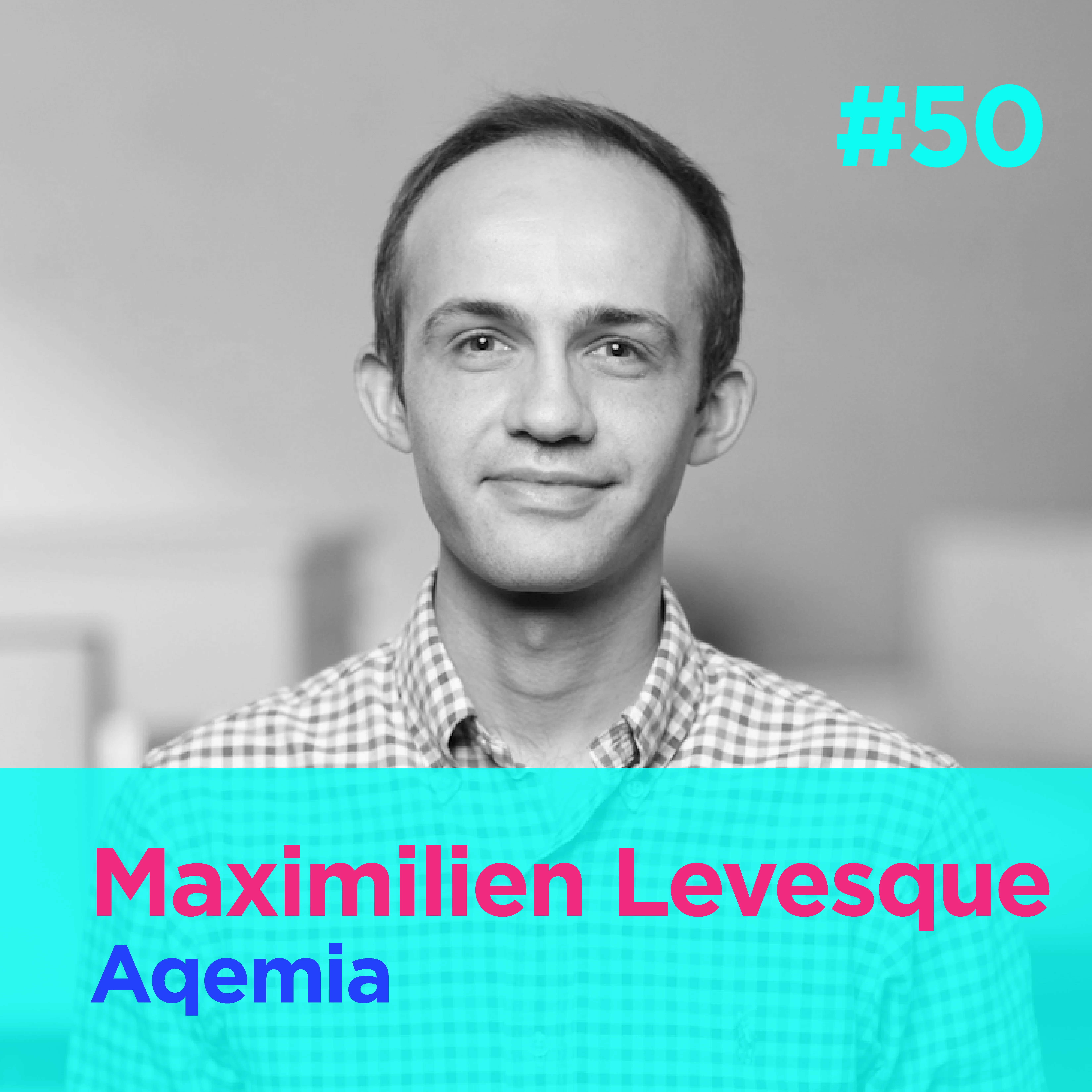
Maximilien is Co-Founder & CEO of Aqemia, a TechBio company revolutionizing drug discovery, merging quantum-inspired physics and medical science with generative AI, creating its own data to rapidly design and discover transformative new therapies.
Episode notes
What's the link between quantum physics, AI, and drug discovery?
Maximilien Levesque might be the perfect person to answer.
A former theoretical physicist, he realised his research could transform drug development by fundamentally understanding how molecules interact at the atomic level.
In 2019, he co-founded Aqemia with Emmanuelle Martiano Rolland to turn that vision into reality.
Their mission is bold: to design new molecules, atom by atom, capable of binding "undruggable" therapeutic targets.
Unlike AI models that base themselves on existing compounds, Aqemia's generative engine creates novel structures, opening up a new universe of possibilities.
In this episode, Maximilien pulls back the curtain on one of TechBio's most promising medical technology startups.
With passion and clarity, he breaks down their approach to drug design, explaining how these "digitally-native" compounds go from the numeric world to real-world testing.
A conversation to understand the ins and outs of an ongoing revolution in the pharmaceutical industry!
Timeline:
- 00:00:00 - Maximilien’s background as a researcher in mathematics and quantum physics
- 00:03:46 - What drew Maximilien to drug discovery
- 00:05:43 - The link between quantum physics and drug discovery
- 00:10:27 - Aqemia’s technology to design new molecules atom-by-atom
- 00:18:36 - Aqemia’s pipeline and ongoing preclinical programs
- 00:20:27 - The difference between AI-based drug discovery and physics-based drug discovery
- 00:27:55 - Striking a balance between internal development programs and external collaborations
- 00:32:35 - Aqemia’s approach to talent recruitment at the interface of biology, mathematics, and computer science
- 00:34:23 - Maximilien’s wish to enter clinical trials in 2026
What we also talked about with Maximilien:
- HIMSS Europe
- École Normale Supérieur (ENS)
- Centre National de la Recherche Scientifique (CNRS)
- Commissariat à l’Énergie Atomique et aux Énergies Alternatives (CEA)
- Ornstein-Zernike equation
- American Institute of Physics
- Sanofi
- Institut Gustave Roussy
We cited with Maximilien some of the past episodes of the series:
- #40 - Cracking biology through AI - JP Vert - Owkin
- #33 - Building the next TechBio venture - Mati Gill - AION Labs
- #13 - Catalyzing drug discovery using organ-on-a-chip models - Bas Trietsch - Mimetas
You can learn more about Maximilien’s publications here and prompt ChatGPT, as he suggested, to find out more about quantum physics, AI, and their applications in the field of drug discovery!
You can reach out to Maximilien via LinkedIn and follow Aqemia’s activities on their website and LinkedIn page!
This conversation is part of Impulse's exploration of how science, medicine, and technology are transforming drug discovery.
If you want to give me feedback on the episode or suggest potential guests, contact me over LinkedIn or via email!
And if you liked the episode, please share it, subscribe to the podcast, and leave a 5-star review on streaming platforms!
You can also support my work by doing a PayPal donation @ImpulsePodcast!
Lastly, don’t forget to follow our activities on LinkedIn and our website!

Full conversation
Episode transcript
Generated from the YouTube captions and lightly cleaned for readability. Names and technical terms may contain transcription errors.
Read the full transcript
Science is at the heart of drug discovery. Uh atoms and molecules are at the heart of what is a a drug. A drug is a molecule with therapeutic interest. And the molecule is a bunch of atoms. Uh the exact uh sequence of atom that uh
binds to the right protein or therapeutic target responsible for the disease and blocks the disease. So at the heart of drug discovery is finding the right molecule that binds to the right therapeutic target and blocks the disease to to cure and this is done with a lot of atomic interactions and at the end of the day mathematics and quantum physics.
All right so hello Maximillian and welcome to impulse. I'm, you know, I'm glad we're finally able to to record the episode. We we missed each other in Paris, uh, when I was attending him Europe and we initially wanted, you know, to have the conversation face to face, uh, in your premises. So, you know, we'll have to make do with the online recording setup. Um, but I'm sure, you know, we'll will still give us the opportunity to have a, you know, a very interesting talk about your path and, you know, the work you do with AIA. Um I don't want to spoil you know our listeners too much but you know for
context I'll mention that you know we've had so far two guests on the show um with whom we discussed the use of AI for drug discovery. Um the most recent one being Jean Philip who you probably know from from Okin and Bioptimus is also in Paris and London actually I guess. Um so it was also like you know an eye openening conversation you know on how they are using AI to identify new drug candidates uh new diagnostic markers and also you know build what is one of the first foundational models uh to understand biology in a new way. Um the second you know episode was with someone called Matty Jill from Iron Labs. I
don't know if you know him as well um but there you know it's a venture builder so we discuss you know how they identify and you know support emerging companies in the field and you know the potential that AI has uh for drug discovery in general. Um the the one element you know that caught my attention um when I was preparing the episode was you know when I was reading about your activities um and that we did not talk about into these episodes was you know quantum physics. So it seems like you know you guys are trying to you know combine quantum physics with generative AI to approach you know drug
discovery from a different angle and you know although I know very little about quantum physics I'm I'm looking forward to you know hearing from you about the topic in general so you need to educate me and how it is you know also serving the purpose of you know developing drugs quicker in the future and but before you know I you know ask you all these how all these things you know relate to each other um and you know for us to get to know more about yourself. Uh I'll start with an invitation for you Maximleian to present yourself. — So hi Matthew. Uh my name is Maxim Leves and I'm the co-founder and the CEO of
Akima and uh we are Paris and Londonbased um drug discovery tech bio um and our mission is to invent preclinical candidates leveraging what you said physics statistical physics and quantum physics. Awesome. So maybe you can tell us a bit where bit more about where you come from because I think you have a previous career in research where you worked exactly on this topic. So it would be good for us to understand a bit you know what was your research focus and how that you know evolved into what what aime is doing today. — Yes. The origin of Akimeia is a technology um that was born in
fundamental research in stat and quantum mix uh so statistical and quantum physics. Um before Akemia which is 6 years old I was a professor at economy and CNS in Paris uh driving researchers around um what happens at the atomic scales in so-called condensed matters which is in fact what happens in liquids. uh I've had a career there and then before that before that I was working at the universities of Oxford and Cambridge in the UK and before that I have a PhD in quantum theoretical quantum physics from the commisseria alen energy atomic which is the French nuclear and atomic research center. — Interesting. And so the and the link between quantum physics and its
applications in healthcare was that something that also came up in the research you were doing? — In fact not at all. Uh the the funny thing I was doing u quite theoretical and mathematics uh mathematical applications um around the physics of liquids. Um I solved a very old in fact equation nobody had solved before called the molecular Einstein Zerniker Muzzi equation. — Okay. — I got a prize from the American. So I was applying it to the nuclear industry because it was my background and u I got a prize for this mathematics those new mathematics from the American Institute of Physics. This prize triggered the interest of uh two leaders
in uh drug discovery uh in software development for drug discovery. So they came to my lab proposed to buy the technology. Um I said but why? — Mhm. ISIS technology uh you don't do nuclear applications — and uh they were eye eyes openers. Do we
say that in English? — Yeah. — They figured uh they they taught me that uh those mathematics could drastically
change the way we invent and find new drugs. And so it was for me the beginning of a new quest uh which uh can
be summarized into uh being useful to something in the universe uh which translates into applicating my equations to finding new drugs and to cure patients at the end. And so, you know, that kind of like takes me to the initial question that I that I wanted to ask you, you know, what what is actually, you know, the link between your quantum physics and, you know, these maths that you were, you know, diving into during your research and, you know, the applications that, you know, these these people saw in um, you know, in your work and its applications for for drug discovery. So there's a a direct linked u science is
at the heart of drug discovery. Uh atoms and molecules are at the heart of what is a a drug. A drug is a molecule with therapeutic interest and a molecule is a bunch of atoms. uh the exact uh sequence of atom that uh binds to the right
protein or therapeutic target responsible for the disease and blocks the disease. So at the heart of drug discovery is finding the right molecule that binds to the right therapeutic target and block the disease to cure. And this is done with a lot of uh atomic interactions and at the end of the day uh mathematics and quantum physics. — Interesting. And so your your idea is really to um I'm trying to understand a bit you know along the process of drug discovery which you know I think we know is like extremely complex. You have to identify you know the the therapeutic target. You have to identify the active ingredient that would match. And then
you have to do all these you know clinical studies. where you know do you see the potential of you know the techn I mean first I think we we need to talk about your the technology and how it works and then how it you know serves certain aspects of the drug discovery process. M so at the heart of I mean a drug is literally a molecule that binds to its target and doesn't bind to
— the rest binds to its targets means uh it blocks the disease binds to the rest means uh it is toxic at the heart of uh I mean binding is measured with something called uh it's a beautiful world word it's called the binding free energy and uh literally we are the best
in the world to predicting binding free energies because we are the only ones having those mathematics. Those mathematics are a key ingredient to predicting if a molecule um has a good binding free energy. So does it bind or not to a target or to the rest. Mhm. — So in fact to summarize the technology at the heart of Akemia, we have a generative AI that invents new molecules, many new molecules and those molecules are proposed to those algorithms of physics- based quantum based algorithms that test each of those molecules atom after atom.
The physics gives the feedback to the generative AI uh which learns and invents better molecules and there is this uh loop of uh continuous improvement invents test
at the atomic scale gives feedback invents better molecule test gives feedback and at the end of the day when we have invented and tested in the computer we uh test the molecules in the
wet club and fuel another loop and that's what we do. Uh this way we for instance to make things clear we identify new target responsible for a cancer say uh neck cancer we have a
program atia we have a program in oncology against uh neck cancer this cancer is triggered by a therapeutic target say a kindness for instance a given kindness — um this is the only context we give to our technology a geni invents molecules that should bind to this kindness and not the others. The physics, the quantum and statics, they test the molecule in the computer gives feedback and then when we are happy from what is generated by the geni, we test in the wet lab.
— Interesting. And so it always starts with uh let's say a therapeutic target for which you look for the molecule that will bind to this having the lowest like binding energy. Ah, so you're very good in stat. — I'm not so good. I brought up the term but minimized binding free energy. You didn't tell me that matter — some some remainings from my engineering studies maybe. — So so sorry what was your question? — Yeah, my question was um do you always start the process from you know having a therapeutic target in mind for which you design a molecule that will that will bind to it? — Yes, exactly. So in fact the very
beginning of the process is a disease then uh from this disease there is known we do not invent biology atmia so there is a known problem the pathways the biological pathways the biological mechanisms um are known some is known and some targets some proteins along the pathway are identified by a chemia or by partners as the reason to I mean as
inducing the disease. — Mhm. — This is the starting point of a program at Akemia, the therapeutic target. In fact, what we do in an expert uh vocabulary would be we do structure-based very rational drug design. — Mhm. Makes sense. And so and my follow-up question would be on the this transition stage where you say you've done you know enough iterations to have a drug candidate made by you know artificial intelligence that could be you know relevant. How is this then translated into a physical you know um compound that you can actually test in preclinical models or and in the future in potentially clinical models. So you are very right. What we do is uh
there are three steps. We invent in the computer, we test in the computer and when we validate in vivo or in vitro which is the wet lab. — Um so your question is about how we move from the — exactly the wet lab. — Exactly. — In fact uh the kind of molecules that we invent at Amia are soal small molecules.
So chemical matter. Um we do not have internally atmia the resources to build synthesize those molecules but we have partners all around the world in the US uh in the UK in Europe and in in Asia to synthesize and test the molecules in vivo uh or in vitro — makes sense — I didn't say it but we are we we are team of 70 people today — 16 Paris and 10 in London going fast in both countries. Uh and everybody's is uh
linked to designing the compounds one way or another. Is it from the from the business side to the physics or quantum mathematics side etc etc but nobody's in the WLA. — Interesting. And this synthesis stage, does it always land with the exact same compound that was designed in the in the previous stages in terms of the atomic structure and its its components? — Um the short answer is yes. In fact, the process uh so the molecules that are generated by the artificial intelligence are usually uh we say chemically feasible. Mhm. — sound uh an expert can build them so to
can synthesize them in the wet lab. Um it's it's really most of the time the case. We also have internally medicinal chemists that were at the wet lab and that help us design the right generative algorithms so that every single molecule we design can be made into the wet lab. And then at the end of the day we have uh partners for instance uh in Europe or in the US that synthesize the molecules and those partners they are real partners of course uh they work for a
chemia but they also give us feedback on the physibility of the molecules and it happens sometimes that some molecule may not be doable and that's absolutely not a problem because the the process is very efficient in designing new molecules — and I assume you know you mentioned At the beginning, your work is to find or create those molecules that not only bind to the therapeutic target but also not bind to all the rest. Is this this like let's say selectivity is this also something that's part of this first step of the process or it comes down the line? Okay. Yes, it's it's in fact uh I think um I I like to think we are the
best in the world to build high binders to invent molecules that are highly binding and highly selective, highly effective and highly selective. And I think this will be I will give you an example. We were talking about this kindness uh earlier. — Yeah. some kindness families are um so
members of the families take the CDKs CDK 1 2 3 4 etc etc they are very similar to each other and you want to touch to bind to only CDK two for instance um the difference between CDK 2 and CDK 1 is very very subtle it's just one or a
few atoms in the binding pocket of this huge protein. Uh the fact that we work atom by atom at aimia and not with an AI blackbox atom by atom makes us the best.
I like to think we are the best in making very selective for instance CDK2 molecules um against CDK1. — Mhm. Okay. And so you mentioned that this was part of a program for neck cancer right? I was wondering like how do you choose the indications where you want to you know leverage your technology are you are you open to like any indication like virtually or — yes so first I didn't say that the CDK2 programs we may have or not is linked to neck cancer. Oh, sorry. — I made the link. Sorry. — CDK2 is linked to breast cancer especially. Okay. It was just an example maybe not a good one to illustrate the
selectivity issue. — Um to come back to your question. So sorry what was your question? — The question was how do you choose the let's say the the indication areas? Exactly. — Yes. So the the technology is agnostic of the therapeutic area. — Exactly. agnostic of the protein family
u because for our technology um those are atoms connected to each other. — Mhm. — So um nevertheless um today is mostly an
oncology company with extensions that are that start to pop up in uh central nervous system disease. — Yeah. Neurology — and uh and metabolism. And the reason why is very simple. We have had and we continue to have partnerships with pharma companies. For instance, for what is public, we worked with uh GNG, Series, Sanui. We have an ongoing large collaboration with Sani uh with a deal up to 150 millions with them for a given
number of research collaborations. And what happened is the first collaboration programs we've had were in oncology. — Yeah. — And so we developed internally a no in oncology — and we continue to push uh this no. So today uh the internal programs of aimia are mostly oncology and some of them are in CNS and some of them in metabolisms but many encology even if the technology is agnostic from uh the therapeutic area. — Super interesting. Um and so in you know in which phases currently of the drug discovery process are some of these drug candidates that are the most advanced in your you know pipeline and in your uh as part of your own you know therapeutic
programs. — Yes. So the for the fully internal uh program fully owned programs. — Yeah. — Uh we have u a funnel uh of preclinical
programs. the most advanced, the free most advanced are today uh in efficacy studies uh in animals. Uh and if you go
uh up the mountain of the funnel, you we have more than 50 programs that uh have ongoing chemistry to um bind to the right target and uh that are selective to other targets. — Mhm. And the bet being that you can go through all these steps much quicker than using a traditional drug discovery approach because you have some guarantee about the selectivity and the therapeutic efficacy of the of the compound from from the start. Um, no. — No. Okay. — No, that's a very important point and uh
in fact I don't think that um being faster by 6 months or even one year or cheaper by — few millions in the discovery phase uh I don't think it makes a difference. — Okay. makes the difference in my opinion is the ability to invent molecules that
are truly innovative for targets that are not well understood for which there is no candidate. So new targets, new programs, hard drug targets etc. So and in fact it leverage uh something very important at the heart of aa the fact that we don't use AI. So
um but physics let me explain please. — Yeah yeah yeah go ahead. — Um if you work with AI you need to train
on solutions of that already exist. So what you do is you typically take a program in oncology that is already known. This kindness is everybody knows about for which there is a lot of data all around molecules that have been designed by medicinal chemists in the pharma published patented et all those molecules that are public. Then you train their your algorithms on this data and then everything you can do is fast followers meters uh molecules that look like what on
— that's absolutely not what we do. uh we tackle problems for which there is no data to train on, no known solutions, no known molecules and for them we craft molecules that nobody had ever seen or invented or that and so we build uh we
are the only ones I think I like to think — the only ones being able to invent the right molecules for those problems that have no solution today — and uh thanks to quantum and statistical mechanics so physics — understood. So it's really — so sorry your eyes because it was a very long answer. The key in my opinion to building something very useful to the world and to inventing new I mean a new biotech a new tech bio is not to be a bit faster or a bit deeper because of AI gain of efficiency in inventing the same molecules as were already existing. The key is to invent those molecules for
hard problems, new problems and with we hope better chances of success thanks to highly selective and highly efficient molecules. — The physics that we have is the key discriminant to building that. I think it's a very interesting take because what I've heard so far is yeah improvements in terms of speed, improvements in terms of cost but no improve I mean it was not like saying let's tackle like those let's say unmet medical needs for which there are no compounds yet or no solution at all and bring a solution to it you know not regardless of how much it cost and how much it takes but increasing the chance of success of you know providing a new
therapy for for that. So, and I think it also explains how your approach is different than what other you know actors are are doing because as you said like you you you do not build on you know leveraging the molecular structure of millions of compounds existing to build a model like you just start from purely chem like chemical and atomic level interactions to create those new compounds that are not let's say biased by you know a model that just inject or that is based on existing compounds. — Yeah, you say it perfectly. In fact, we go beyond the limits of artificial
intelligence — which is to only train and extrapolate very interpolate between the training points. — Maybe I can give you a very short example coming back to those CDK 2 and CDK 4. — Yeah. say and and that's not absolutely wrong. It's it's a very good example today mostly most of the I mean CDK24 sorry there are a lot of molecules that bind to both CDK2 and CDK4.
So the literature the scientific literature uh the patents the world the internet is full of molecules as bind to the two targets CDK2 CDK4 say know that you want to invent for a very good biological reason and that's the case in fact uh today um a CDK2 selective molecule you want a molecule that binds to the CDK2 but not to CDK Okay, your AI blackbox, if you trained on both on binders of CDK 2 and 4, will only invent molecules that bind to CDK 2 and 4. It doesn't know the difference between CDK 2 and 4. — Mhm. Of course, CDK2 and CDK4 are
completely different uh stacks of atoms. Yeah, — we invent the right molecule that will do this interaction with CDK4 and not
this interaction with CDK2 and so it will be selective. So in fact um once again we go beyond the limits of AI that needs to train on data so on chemical matters that already exist. I like to think that some others may invent molecules that look alike are metos for fast follower programs while we invent completely new chemical matter for truly innovative problems. — Mhm. Understood. And so for those internal programs that we talked about um at like at which point do you because obviously like you are you are at this discovery phase of the process and at some point you know you go through these preclinical trials and then you go into
clinical trials. Is that something that you intend as a company to do you do you intend to manage the whole like end to end process or would you at some point partner to run those clinical trials based on the compounds that made it to this stage? — So uh yes we want to be part of the full process up to validation of phase two. So validation that the molecule is useful to a patient. — Yeah. then the the way forward especially for the first programs um I think we are not there yet but it's very soon it will be for the end of this year or the next year um maybe the right
partner with the right knowledge to fast forward any um I mean what we would have done learning clinical trials um is the
best solution is maybe we will look for a partner that will increase the chances of success of those trials because they know they have already done it uh in the past for the for similar indications or something like that. — Okay. And and I guess the is your strategy like to demonstrate because you mentioned you know initially that your technology is applicable to any conditions like any disease areas. it doesn't it's not specific to oncology or neurology or something different. And so I'm wondering like how do you balance between you know pushing you know these ongoing programs that you have and also accepting potentially requests for other indications that you're not focusing on
right now. How do you you know make that balance? — So um there are several balance uh balances to find. The first one is between the internal portfolio and our portfolio with partners. Uh we have ongoing collab research collaborations with pharma companies and we typically limit ourselves to 20% of the team no more than 20% of the team working on programs in partnerships uh with pharma companies. uh those partnerships are extraordinary good to learn validate the
technologies to the outside world and to do revenues. — Yeah, for sure. Um — and so 20% uh of the of the of the team
is working on those programs and then for the rest of the team um the fact that we have this mathematical solution I mean the physics that we do that is unique thanks to the mathematics at the origin of Akima allow us not to uh I
mean we don't need experimental data to start with but the structure of the therapy IC target um and we don't need supercomputers to do brute force computing with GPUs etc as is needed uh
for uh AI first companies. So we are very lean and able to start many programs in parallel. So we are a portfolio company and then there is this riskreward uh balance there is this for the volume owned uh pipeline riskreward therapeutic areas so mostly it's 80% oncology today 20% uh CNS and metabolism
and uh yep does it answer your question — yeah it I think it answers my question so I think the tradeoff you know 20% versus or 20% working with external companies is 80% internally. I think that's yeah it's interesting because it's still like I mean for the potential of the technology and also even you managing the partnership I mean I guess the one with Sanopi is one of these partnerships that that is part of this 20%. I would say having like you said you were 70 so 14 people working on on these on these partnerships to me it sounds like it's probably a lot of work to manage for a small amount of people
and um yeah I think it's interesting to hear how you guys are distributing these efforts uh in in the current team but I assume that going forward you guys are and I and I saw you you were you recent you mentioned you recently expanded to the UK I guess that comes as well with you know uh opportunities to you know broaden the size of of the team with some of the talent there. — Exactly. We are u uh quite well funded. Uh we raised uh in the past 5 years 100 millions. — Mhm. and um and two times uh past in the
past year and the last time we raised was especially to uh increase the size of the team to be able to tackle more programs in parallel because the technology can and uh and and and and the deal with Sani especially it's a it's a large deal was absorbed in terms of you know how you manage things. So um at the beginning of this year we opened uh the London offices. Um it's no
12 to 15 people. — Mhm. — Um and we we are 70 people in total and we want to be around 90 at the end of the year and around 150 at the end of next year. — Okay. So it's indeed a lot of bandwidth to and uh yes a challenge to attract uh
the best talents everywhere in Europe uh and have them in London or in in our London or PI offices — and can you tell us more about you know um the types of let's say roles in the organization for now because I'm wondering like do because that's something we talked about with Jean Phillip and he was saying it's really hard to find people with you know I mean it's like two problems like one was saying it's hard to find people who have a very strong biological biology background but have also the computer science competencies and the other way around is also a problem saying we we we cannot easily find people with very
strong computer science um skills that are already let's say familiar with biological processes — um so I share this observation but we have a strategy around that. Uh first we look for T-shaped people. Uh so people
with uh strong expertise be it in biology, chemistry, mathematics, computer science, machine learning or whatever and a capacity to connect to the other expertise. Mhm. — Um and we have internally um I don't know how to say that correctly but uh uh um people development people um I mean efforts so that people internally have the time and the resources to learn the vocabulary of
the other expertises. So our strategy is find people that have their expertise are able to connect and give them the means the the the resources to learn the part of the other expertise that is needed for the job and uh make it fun
pleasant — to connect with those colleagues of you with another expertise that does it mean something? — Yeah. Yeah. Makes sense. Makes sense. Maybe it inspires Jean Philip and he can copy that approach. — He's a friend. I I wouldn't dare give advice as to — I was the the my other question was you know um how how far are we from you know seeing uh one of the drug candidates that are part of your you know your own programs. I mean first go into human clinical trials and you know potentially looking even more in the future like being available you know in the in the market. This is a a very difficult question. Uh
and the the why it is so difficult is because we must stay very humble um uh with respect to biology with respect to the human body with respect to the unknown and uh that's also the beauty of science and the biology etc. So I can give you my um what I would love. — Yeah. — My wish and that's really the core of what the why we are here. So my wish would be that we enter into clinical trials next year um with a molecule that we designed uh from zero uh to um a molecule that binds
to its target doesn't bind to the others have good um we say at physical chemical properties — and shows efficiency in the cells and then in the animal models um and then show it in a regulatory phase etc. So I hope I wish uh we enter into clinical trials u um end of next year. It would be absolutely great. Um and then uh when it would be available to patients all around the world. Uh this I would love to be by 20
30. — Yeah. In fact, I I like to think of aimia like um several phases 20 to 25. Um build the platform, build the technology, start from fundamental science and mathematics and build something that is useful to I mean being confident we can be useful to patients, build the tech and build the drug discovery processes etc. Then there is a second phase which is 26 to 28
learn clinical development. That's another really uh — yeah big piece. — Yeah that's a big piece and then I hope
repeat repeat repeat. So build a platform, know how to do drug discovery very well in useful programs and then put them into patients test be useful to something again and learn and then again and again and again — for a lot of different indications. No, that's that's that's everything I wish you as well. Um you know Maximia, I'm very thankful for you know your time so far. I'm keeping an eye as well on how much time we have left. Um, one of the first, you know, recurring questions I had, uh, for, you know, every guest on the on the podcast is, you know, for for those, you know, of which we sparked interest for, you know,
the the field in which you work, which is very, you know, specific and I think like interesting. Um, what resources would you recommend uh, you know, them to have a look at or to explore to to learn more especially if they don't know much about it? So you know are there any books, publications or websites you would like you would like to redirect them to? — So if they want to learn about aas technology for instance that's what — exactly or Yeah. Yeah. — Yeah. So I would suggest u some papers uh we wrote in my group in the journal of chemical physics. Those this is theorical um pieces but uh are in
physical reviews. Um we have more than 47 papers uh peer-reviewed papers uh on the theory etc. That's the hardcore science. — Yeah hardcore. And then I have a very naive answer. Uh Chad GPT is extraordinary. — Really? Uh much better than I am at uh communicating science. Uh since it is public uh it's extraordinary. — Okay. Yeah. D I'm happy to link some of the papers in the show notes and and also link JP. Um the second question is and you know it's maybe it's a bit early for you to answer and maybe you know you will have the answer in 20 in 2030 if your wish is you know fulfilled. Um but
can you share with us you know an anecdote from from your work so far with a Kima that question is normally like that made you realize the impact you were having on people's lives but in that case maybe it's probably the impact that you've had on you know industry partners or what made you yeah do you have any anecdote to share in that regard — I think it's a it's a very easy one um the first time yeah really uh the first time uh we had a positive result uh from one molecule we designed uh that reduced the size of a tumor in a mouse. You know uh can you imagine for the team and I and
my co-founder Emanuel — uh we had started from pure quantum physics and mathematical stuff and one day you receive an email with a figure showing that your molecule decreases the size of a tumor crafted on a mouse and then you start to imagine Yeah. that it
will maybe do the same in patients etc So it start to becoming true. — I don't know if it's if it makes sense but — no I think — I don't know we were like 50 people in Akima at this stage or 40 people and uh everybody was quite uh — wow — wow — touched. Yes, — it was we were quite crazy like uh
— this is working — this and at the same time uh very humbled with everything we have to do but uh — yeah it was a huge milestone. — Yeah. Yeah. No, thanks for sharing that. Um so if you would you know recommend uh a fellow you know innovator in healthcare in health tech as a as a potential guest for the podcast um who would you recommend and why would you recommend her or or him? — Um I would recommend um Fanny Jolan. She
is the CEO and co-founder of Oracle Oncology. — Okay. — And she works at Gustavos Institute. Gustavo Gustavo — specialized in cancer and she — she is an expert in molecular oncology and in um organoids. Oh okay.
— And for me I mean I come from statmeics or theoretical stuff. Uh I've seen tumors from patients. Uh I mean in those
plates and test molecules on those real tumors. It was uh uh yes. So, and Anthony is an extraordinary uh researcher and uh an example CEO for me.
Super cool. No, I mean I'll definitely consider it. You know, we I think it was like episode 13 I talked to with the was it the chief scientific officer of Mimetas, you know, this company. Yeah. It's a Dutch company that is very strong in, you know, organoid um development that I think got acquired by Merc. Uh and uh you know I I also know that like you know I mean I work for for a com I work for RO and I know that in the track discovery process we push also very hard on the use of you know organoids and I'm I I'm like fully with you. It's a very
interesting technology that they're using. — Yeah. Uh um yes uh imagining a path where um you can be absolutely sure that a true tumor is reduced by uh your
molecule before going to the patients and the beauty of its complexity and uh I think it will completely uh change the drug discovery process. really the chances of su I hope and I believe the chances of success the probabilities of success will be dramatically changed by even a few%. — Yeah. Yeah. But still a big a big change. Yeah. — And she's very cool. — Awesome. Then no thank you so much Maximia. I learned a lot of things and you know I was really happy we could dive into all of this because for now like I there'sn't a lot of information yet on the website or exactly so so thank you for you know your openness and
you know sharing uh everything you've shared uh today uh you told me it was the first podcast episode you've done so I hope it was a positive experience for you uh but it was a great conversation for me so so thank you — thank you very much Matia Thanks for watching the episode. I hope you enjoyed it. You can subscribe by clicking on the podcast channel at the top right and watch another episode here at the bottom.